'Megaprojects' bill passes Illinois House, Bears say changes needed for Arlington Heights stadium

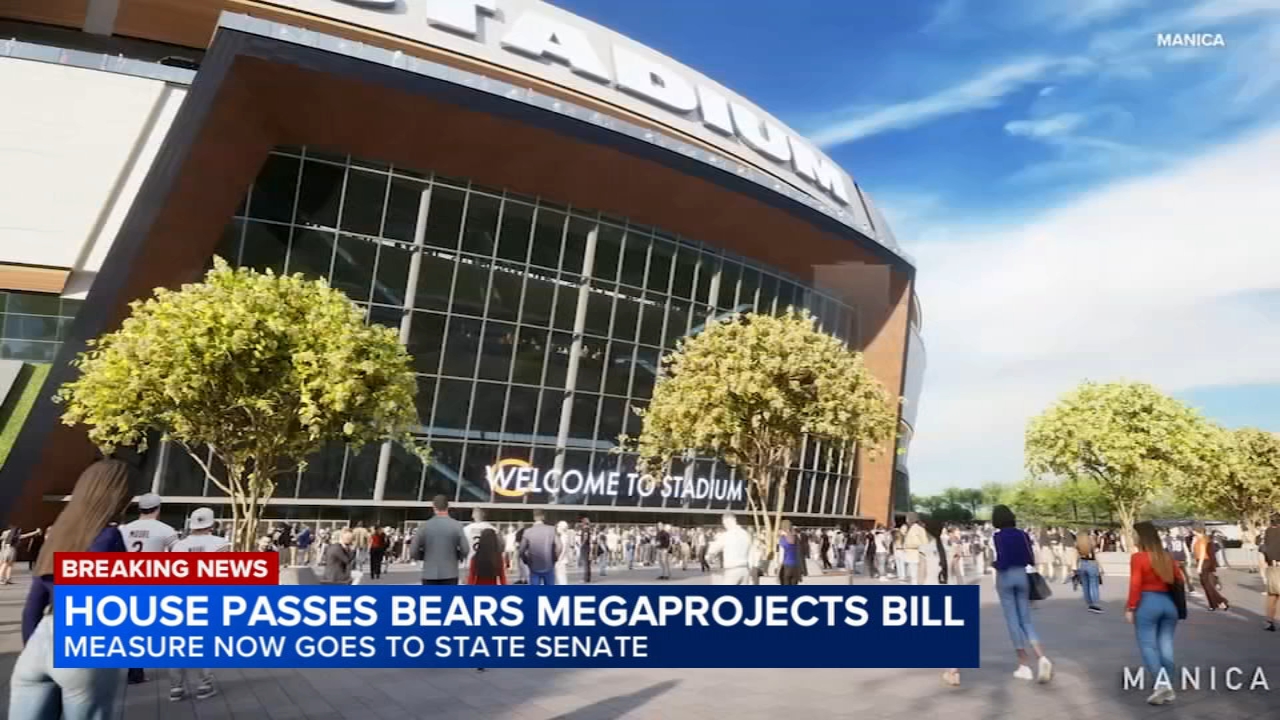
SPRINGFIELD, Ill. (WLS) -- Illinois lawmakers advanced a Chicago Bears stadium "megaprojects" bill out of the Illinois House Wednesday, and it will now go to an Illinois Senate vote.
Illinois state lawmakers are considering tax breaks for big construction projects. That may entice the Chicago Bears to build in Arlington Heights.
However, in a statement released late Wednesday after the advancement of the bill, the Bears say more changes are still needed for them to pursue the Arlington Heights site.
There was a great deal of maneuvering behind the scenes Wednesday. Democrats spent hours making amendments to the "megaprojects" bill that will help it get approval from lawmakers around the state.
ABC7 Chicago is now streaming 24/7. Click here to watch
State Rep. Kam Buckner said he left the Capitol at 3 a.m. and returned at 6:30 a.m. working to get a bill through before the spring session ends May 31. He said he was optimistic the "megaprojects" bill would go to the house committee for a vote Wednesday, and it did.
"We are in a decent spot," Buckner said. "The conversations were good. We had a lot of positive feedback from my colleagues and we'll see what today has in store for us."
Delegations continued Wednesday as Illinois lawmakers race to get the deal across the finish line and determine the fate of the Chicago Bears.
The latest changes to the "megaprojects" bill are aimed at winning over lawmakers concerned about the long-term impact on regular taxpayers.
Sources said the Illinois Federation of Teachers is lobbying for language in the bill that would guarantee big developments won't drain school funds.
"We know that we have seen a tremendous rise in property tax rates for people who live in this state," Rep. Buckner said. "So what I said is, if let's find ways to create some property tax certainty for corporations and developers, then we should do the same for the people who live in the state. And so this bill is an attempt to do that."
After productive conversations Tuesday, Buckner said they filed an amendment Wednesday based on feedback. Then, it was be sent to committee, where they voted to approve it.
The Bears have owned the former home of the Arlington race track for more than three years now, but they have yet to put a shovel in the ground while they wait for a deal that allows them to negotiate potentially lower property taxes.



The Bears have said Chicago is no longer in the running, but they are still considering moving to Indiana where lawmakers there already approved an incentive deal for the team.
The Chicago Bears released a statement Wednesday evening on HB 910 passing out of the Illinois House, saying "We welcome the progress made on the House's version of the mega project bill; however, additional amendments are necessary to make the Arlington Heights site feasible for our stadium project. We support Illinois leaders as they determine the path forward to making the essential changes to the mega project bill and aligning on infrastructure funding."
The Bears and the NFL are apparently willing to spend several billion dollars to build a new stadium in Arlington Heights. But without a firm commitment on the amount they'll pay in property taxes, experts say they would be unable to get the financing they need. Arlington Park racetrack, the previous owner of the property, paid about $3 million a year in property taxes, according to stadium financing expert Marc Ganis with Sportscorp LTD.
"The Bears have said we will pay more than Arlington Park, but we need that amount to be capped in some mater so we can finance the project," Ganis said.
Some state lawmakers are apparently on board with providing the Bears a deal to negotiate a plot or payment in lieu of taxes arrangement with the community and school districts. Rep. Buckner has been leading the proposed legislation through the Illinois House. He says the latest amendments help make sure the bill protects taxpayers.
"If we're going to find ways to create some property tax certainty for developers we should do the same for the people who live in the state," Buckner said. This bill is an attempt to do that."
Specifically, updates to the bill would direct 50% of pilot funds go to property tax relief. The bill would also specifically prohibit pilot deals for data centers, which bring increased energy costs. The program and it's incentives are reevaluated after five years. There are also additional incentives aimed at helping redevelopment of the South Loop rail yard that is under consideration for a new White Sox stadium, as well as other large scale projects in the state.
"We took our time to make sure we develop our twin obligations of getting this done and getting this right," Rep. Buckner said. "And I think we're there."
Ganis says the Bears clearly favor Arlington Heights, but Hammond, Indiana's deal comes with significant government support and no property taxes.
"The owners want to know what in the world is holding this up?" Ganis said. "And if things just don't look right in Illinois, you know what here's our nod, go ahead and finish it up in Indiana if you need to."
In a poll conducted by Suffolk University in Boston, 56% of people said they'd rather see the team move to Arlington Heights, compared to 10% who prefer Indiana. Another 26% said they didn't care either way.
Even though the Illinois House has approved the bill, there is still a long way to go. The Illinois Senate and Governor JB Pritzker have been working on the legislation for months, and they have not had a chance to review the latest changes to the House version of the bill.
Governor Pritzker's office released a statement Wednesday evening, saying in part ""Governor Pritzker has been clear and consistent for years that the Bears should remain in Illinois, and that any legislation needs to protect taxpayers... Today is an important step, and the Governor's Office looks forward to working with the Illinois General Assembly to advance a bill that reflects our shared priorities."
The Bears are expected to meet with NFL leadership next week to share an update on their stadium search, adding more pressure for Illinois lawmakers to get a bill passed.