Chicago City Council approves Mayor Brandon Johnson's affordable housing ordinance
It uses taxpayer money to help create more affordable housing.


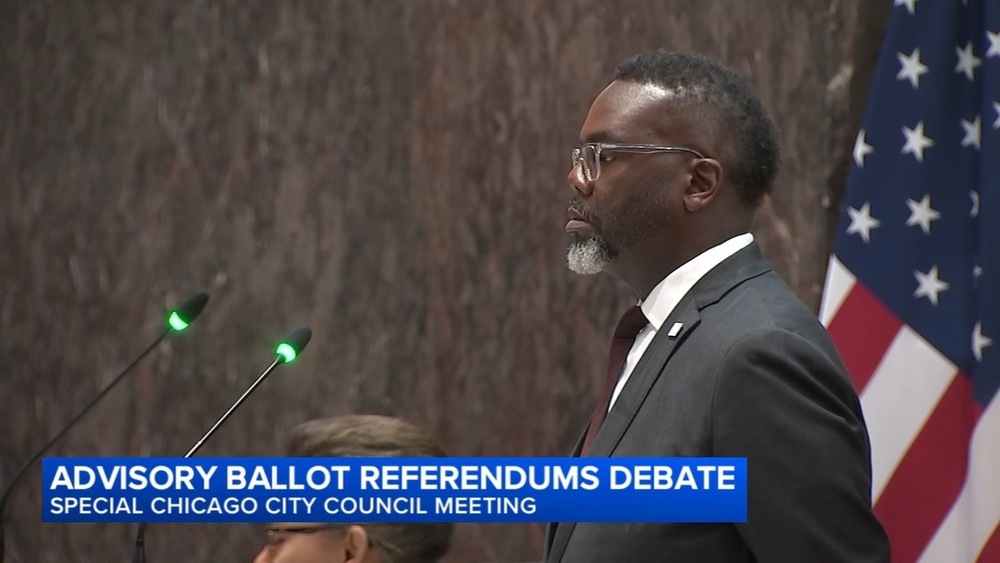
CHICAGO (WLS) -- City Council handed Mayor Brandon Johnson a major victory Wednesday, by greenlighting his Green Social Housing ordinance: It uses taxpayer money to help create more affordable housing.
Renovations continue at a Loop office building that is being converted into housing: 30% of the units will be affordable.
ABC7 Chicago is now streaming 24/7. Click here to watch
Johnson plans to build on that with an ambitious and innovative housing plan.
"What we are doing is we are moving with expediency in building more affordable units," Johnson said.
There were hugs for all, as a mayoral campaign promise is becoming a reality, with the passage of Johnson's Green Social Housing ordinance. Using money from Johnson's $1.25 billion bond fund passed last year, the city will create a nonprofit to dole out revolving low-interest loans for housing construction.
"We're looking for developers who might already have a project that is stalled because of the financing. We are looking for developers who are willing to develop on city-owned land, and we are looking for developers who might be willing to look at acquisition and rehab of projects," said Lissette Castañeda, Department of Housing commissioner.
Castañeda says when the loan is paid back, it can be used for another project.
SEE ALSO: 'A second chance': West Side community center opens as alternative to incarceration
Alders who voted against the ordinance have concerns about creating a nonprofit with a mayoral-appointed board.
"So, if they start making bad decisions with all the money we're handing them, we have no way to hold them accountable," 42nd Ward Ald. Brendan Reilly said.
The new organization will need paid staff, as well.
"We have a $1.3 billion deficit, and we are creating jobs over $100,000. What sense does that make?" 9th Ward Ald. Anthony Beale said.
"I've never heard anyone demonstrate animus towards more jobs; we are the most pro-worker city in America," Johnson said.
The ordinance calls for projects with 70% market rate units that will subsidize 30% of affordable housing.
Others against the new plan say it's not worth taxpayers' money.
"This fund costing $135 million at best will provide 400 units per year. That's a drop in the bucket," 34th Ward Ald. Bill Conway said.
Conway says cutting red tape is the answer to help developers build more affordable units. The city faces a housing shortage of 120,000 units.