Some UChicago doctors back bill requiring firearm manufacturers to help cover gun violence costs


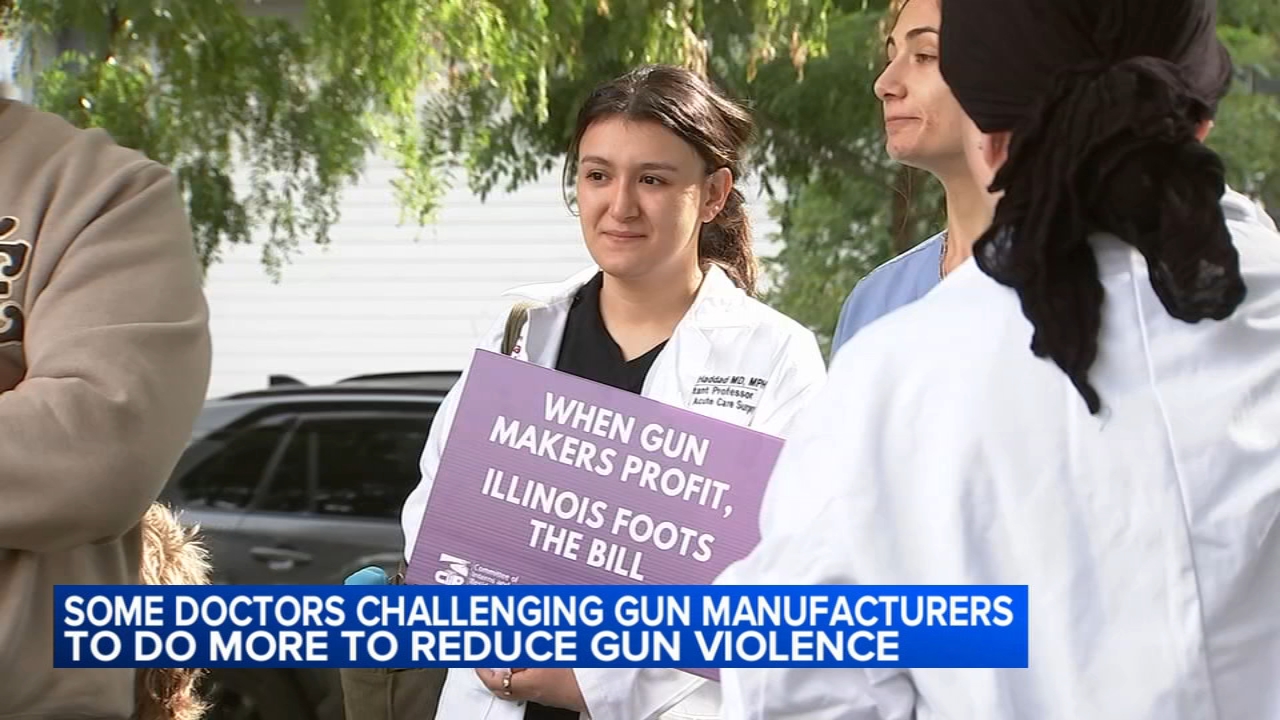
CHICAGO (WLS) -- Eight years after the University of Chicago opened an adult Level 1 trauma center amid community pressure, some emergency room physicians say treating victims of gun violence has motivated them to become advocates for policy changes aimed at reducing its impact.
A group of doctors from UChicago Medicine joined state lawmakers at a news conference to support proposed legislation known as the RIFL Act. The bill would require firearm manufacturers to pay a percentage of the medical costs associated with injuries or deaths linked to their products.
ABC7 Chicago is now streaming 24/7. Click here to watch
"We have had enough," said Dr. Anthony Douglas, a UChicago resident. "The physicians and staff before you today have called time of death on more Illinoisans than we can remember."
Supporters of the legislation argued that the financial burden of gun violence is currently borne by hospitals, health care workers, taxpayers, and families.
"We have big corporations that are making massive profit, and it's time for us to get a little bit of that to make sure that we can pay for the fundamental things that we need," said state Sen. Robert Peters, D-Chicago, who represents the 13th District.
State Rep. Kevin Olickal, D-Chicago, who represents the 16th District, said, "Hospitals pay, healthcare workers pay, taxpayers pay, families pay, everyone pays except the companies that built the pro- built the product to cause the profit."
SEE ALSO | 2 teens shot, critically injured in Bronzeville; over 30 shot over holiday weekend: Chicago police
Top Stories


These doctors said the volume of gun violence cases they treat underscores the need for action. Over the weekend alone, they said dozens of gunshot victims came through the hospital's emergency department. Over the last four years, they said they have treated more than 4,600 gun violence cases.
Dr. Diane Haddad, an attending physician at UChicago Medicine, said those experiences have shaped her role beyond patient care.
"The prevalence of firearms and the burden of firearm injury that these South Side communities experience, um, needs... requires different solutions, and that's where, um, for me, I see myself as an advocate," Haddad said.
The proposal also has support from people directly affected by gun violence. Pastor Brenda K. Mitchell, whose son was killed by gun violence and who raised her two grandsons afterward, said she believes the legislation could help address the broader impact on families and communities.
"The ability to know that harm is there, you know, the potential to reduce the risk to municipalities and even to families that are surviving this, which is not easy. So, I think that that's a huge part," Mitchell said.
The legislation could be taken up in January.
The proposal is drawing pushback. Requests for comment were sent to local firearm manufacturers, the Illinois Firearms Association, and the Illinois Rifle Association, but no responses were received in time for publication.