Teenage bat crusader from Elgin on mission to rebrand winged mammal
'They're really just a vital species that needs to be protected'

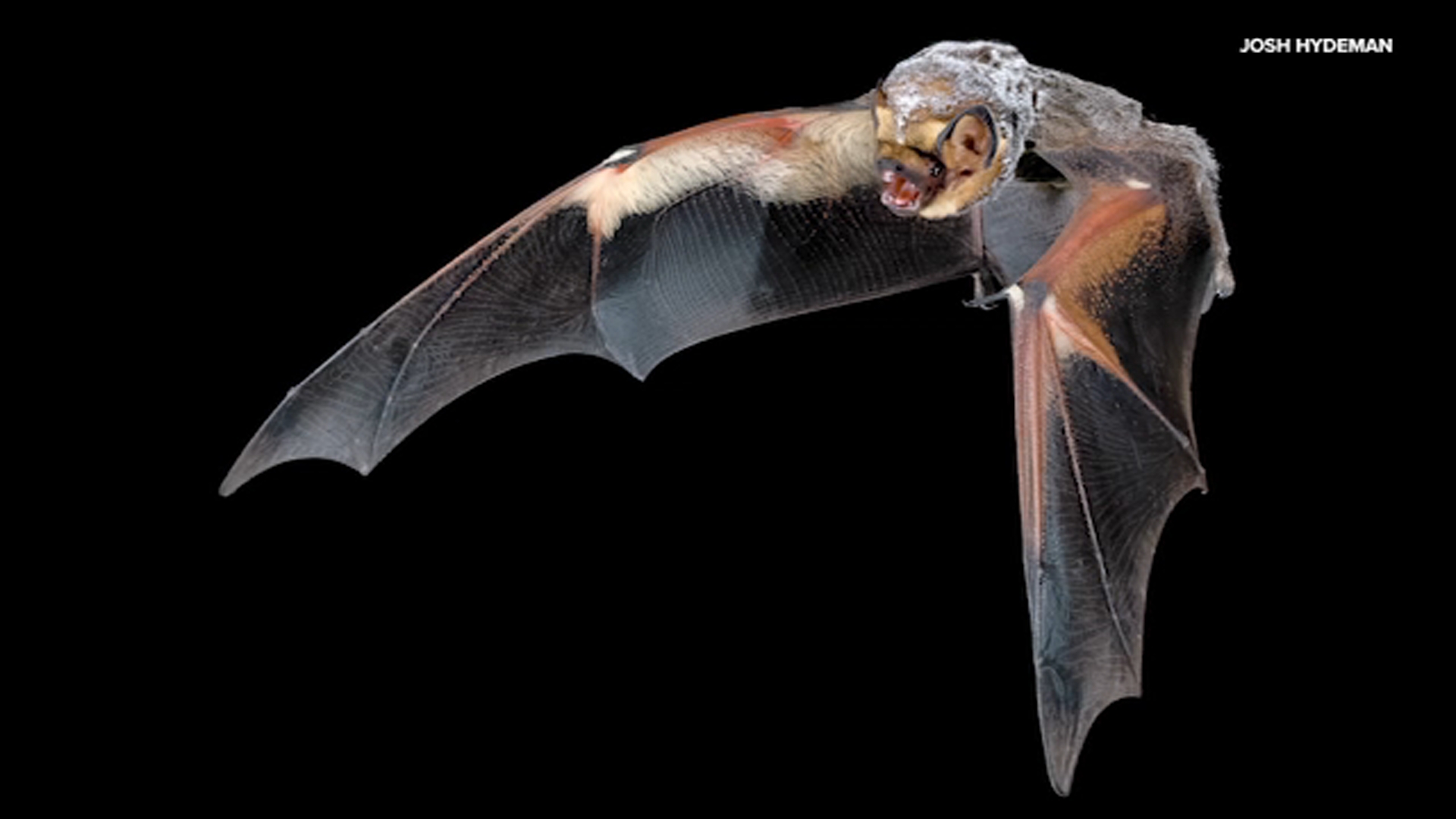
ELGIN, Ill. (WLS) -- It's pretty easy to see bats in Chicago, if you know what you're looking for. You might even see them outside the Lincoln Park Zoo, where specialized bat houses have been installed.
While bats are most active in the summertime, 16-year-old Marlee Christiansen of Elgin says there is nothing to be afraid of as they return to the area.
ABC7 Chicago is now streaming 24/7. Click here to watch
"We just know how mistreated bats are," said Christiansen, a member of Jane Goodall's Roots & Shoots Youth Council. "There's so many stigmas, especially associated during like Halloween time and scary movies."
Teenage bat crusader Christiansen doesn't wear a cape, but she is on a mission to rebrand the winged mammal.
"They're so vital for ecosystems," Christiansen said. "They eat harmful insects; they are pollinators and they disperse various seeds. They're really just a vital species that needs to be protected."
Marlee's journey began eight years ago, after she met legendary conservationist Goodall at the Field Museum. Her latest project is helping to educate more people about bats and providing the animals with safe shelter by building bat houses.
"The bat houses themselves, this is like the more hands-on grassroot action that we can do right away," Christiansen said. "It helps protect them from collisions and just like disorientation in urban settings by giving them a safe place to nest."
Liza Lehrer of the Lincoln Park Zoo has been researching Chicago bats for the past 10 years. She says the city skyline can be a confusing landscape for them.
"We are finding that bats do collide with buildings, especially the more modern buildings that kind of have that smooth glass facade," said Lehrer, assistant director of the Urban Wildlife Institute at Lincoln Park Zoo. "We're not really sure why that's happening because you might remember that bats are using echolocation. So they're emitting these call pulses and they're listening for those echoes back. They do use vision to some degree. Their eyesight is not as poor as we kind of think it might be."



Most people don't realize bats are all around us because they are small and only emerge around sunset and sunrise.
"They don't come out in broad daylight unless they're like sick or ill," Christiansen noted. "If you see one on the ground, they do look, they're really small. They're like 2 inches. So they look like trash and people can mistake them for such."
But in fact, bats are the opposite of trash. And they're not flying rodents.
"Bats are actually not at all related to rodents," Lehrer said. "They're actually more closely related to humans than they are to rodents. It would be extremely rare for a bat to come into contact with you or to bite you."
For Christiansen, protecting the bats is just the beginning.
"It's so easy just to say like you support something," Christiansen said. "However, no change actually gets done until there's boots on the ground, conservation, grassroots people doing action."
And Christiansen is just getting started. Her short-term goal is to get 15 of those bat houses installed across the Chicago area.
Beyond the local impact, experts like Lehrer say there is another reason to like bats: They contribute a minimum of $3 billion per year of natural pest control to the agricultural industry. It's a true "green" investment for Earth Day.
Hop into the Animal Kingdom Challenge
Jane Goodall's Roots & Shoots has selected Christiansen as one of the 10 regional winners of the "Hop into the Animal Kingdom Challenge."
The organization teamed up with the Disney Conservation Fund to connect kids with nature and inspire them to make a difference in their communities. All the winners will travel to Disney World for a youth summit and celebration.