Former Illinois House Majority Leader Barbara Flynn Currie, 'iconic public servant,' dies: AG

CHICAGO -- Barbara Flynn Currie, a 40-year veteran of the Illinois House and the first woman to serve as the second-in-command majority leader of the chamber, died Thursday. She was 85.
Currie, who is tied for the longest-serving legislator in Illinois history behind imprisoned ex-Speaker Michael Madigan, retired from the Illinois House in early 2019 but remained involved in state government and politics, including serving as the head of the Illinois Pollution Control Board, a post she held until her death. She maintained relationships with colleagues who grieved her death on Friday.
ABC7 Chicago is now streaming 24/7. Click here to watch
State Rep. Curtis Tarver, D-Chicago, who was elected in 2018 to replace Currie after she announced she wouldn't seek a 21st term, was emotional as he summarized her legacy as a "trailblazer" in a speech on the House floor in Springfield. He said she "raised her children first, finished her degree later, in what she described as 'doing it on the motherhood plan.'"
"That mattered," Tarver said. "It shaped how she saw people, how she approached policy and how she understood their real lives behind the decisions we make in this chamber."
Currie, whose father taught at the University of Chicago, grew up in Hyde Park and graduated from its laboratory high school in 1958. But the next year, she withdrew from her university studies at the U of C and married her husband David, a recent graduate, whom she followed to Harvard Law School. In the early 1960s, the couple moved back to Chicago when David began teaching at the U of C's law school.
While raising young children, Currie finally obtained her undergraduate degree in 1968 before working on the campaign of activist and lawyer Michael Shakman to be elected delegate to the 1969-70 constitutional convention. As she told the University of Chicago's alumni magazine in 2019, it was Shakman who encouraged her to run for an open House seat in 1978.
When Currie arrived in Springfield as a newly minted legislator in January 1979, it was to a Capitol - and by extension, a state government - run almost exclusively by men. According to transcripts of House proceedings at the time, she was referred to as "Mrs. Currie" more than a third of the times she was called on to speak on the House floor during her first term; in modern times, representatives are almost exclusively referred to by their titles.
Women comprised roughly 13% of the legislature in those days, and as Currie told the U of C's magazine in 2019, the few women who were in public office "generally inherited the job."
But Tarver noted Friday that there are now 78 women in the General Assembly, which account for roughly 44% of the Illinois House and Senate, a statistic that can be directly traced back to Currie, he said. Madigan's appointment of Currie to majority leader in 1997 was not popular, but Tarver said she'd earned it "through preparation, discipline, and most importantly, intellect."
"She did not inherit it," he said. "She built the path."
House Majority Leader Robyn Gabel, D-Evanston, who is now the second woman to serve in that role, broke down in tears Friday as she asked the House for a moment of silence "to honor my friend, my mentor and my role model for over 30 years."
Gabel expounded on Currie's example of serving "with dignity ... humility" and her example of how "to dedicate your life to something larger than yourself."
"Her leadership in the General Assembly helped guide the state through some of the most difficult moments," she said. "The impeachment, actually."
Gabel was referring to the impeachment proceedings of ex-Gov. Rod Blagojevich in early 2009, for which Currie had been appointed chair of the House committee to investigate the governor after his December 2008 arrest by FBI agents. Blagojevich wouldn't be indicted until April 2009, but in the weeks after his arrest, the Democratic governor declined to resign.
In addition to shaking down people, including children's hospital leaders, for campaign donations, Blagojevich was accused of attempting to sell president-elect Barack Obama's U.S. Senate seat. Before his 2004 election to Congress, Currie worked extremely closely with Obama as her state House district comprised half of the district he represented in the Illinois Senate.
Heather Wier Vaught, an attorney in the speaker's office at the time who worked on the impeachment effort, recalled that when Madigan formed the bipartisan committee, many in Springfield expected a quick process wherein articles of impeachment were drafted and Blagojevich swiftly removed from office.
But from the outset, Currie made clear that the committee's work would be "a very solemn experience" and that "every i was dotted and every t was crossed," Wier Vaught, who is now a Springfield lobbyist, said.
Wier Vaught said Currie and the committee had to invent the process "from scratch," because the state constitution didn't specifically lay it out and Blagojevich was the first constitutional officer impeached in Illinois.
"A lot of us on staff - we never worked harder, we never worked so many hours as we did those weeks because she was so insistent we did everything right," she said, including giving Blagojevich a chance to defend himself. Ultimately, he declined to testify.
"She didn't just treat it as a political exercise," Wier Vaught said of the impeachment proceedings. "It was important to her that it not look like a clown show and that it be a legitimate process."
Wier Vaught pointed to Currie's same seriousness in leading the post-impeachment negotiations on campaign finance reform, along with other matters like criminal justice reform, which she said Currie championed "before it was cool."
Another former Democratic House staffer-turned-lobbyist, Liz Brown, agreed, calling Currie "the original Illinois progressive."
Currie was often criticized as being too close to Madigan and what many referred to as his "Democratic Machine." But from Brown's vantage point during a near-decade on staff, she said she saw Currie "work within the system" to change it.
"If you look at all the bills that passed under Madigan that had any progressive bent, that was Barbara," Brown said. "There wouldn't be any progressive wins without her pushing back on Madigan."
But Currie was also a pragmatist, Brown said, and a master negotiator with an acerbic wit.
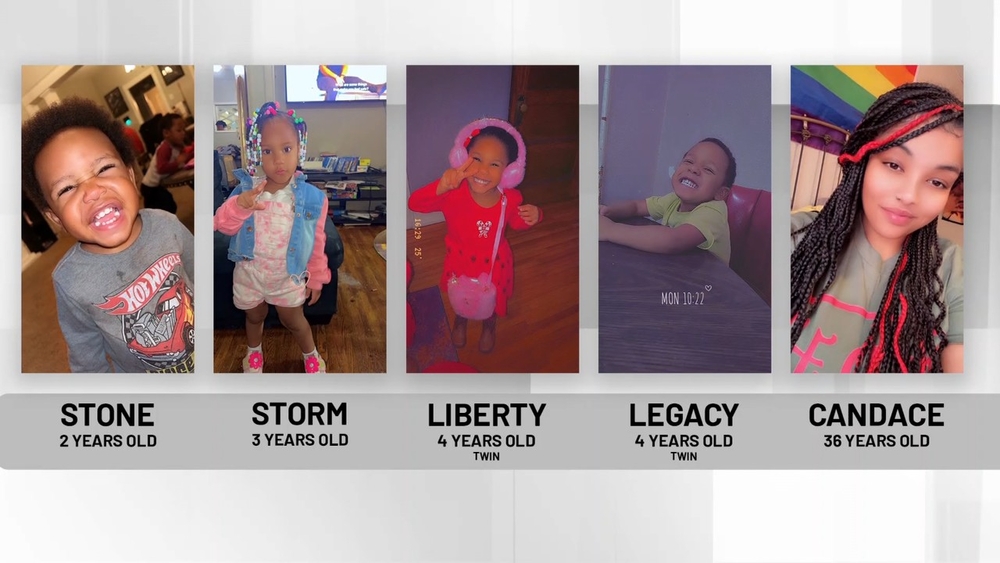
SEE ALSO: Wife, son of late Cook County Commissioner Dennis Deer found shot, dead, Chicago officials say
She also recalled Currie going to bat for her personally when she wanted to leave staff to become a lobbyist in 2009. Brown said that key Madigan deputies told her flat-out no - "this isn't the year you become a lobbyist."
According to Brown, Currie stepped in, "physically pushed me" into the office of the senior staffer and said simply: "she's becoming a lobbyist."
When the message back was that Brown "wouldn't be getting any help from the speaker's office," Currie retorted that "she won't need any."
Brown said the episode was another example of Currie working within the system to change it.
"You had to earn her respect," she said. "But if you earned it, she had your back for life."
Attorney General Kwame Raoul said, "Illinois had lost an iconic public servant, and I have lost a mentor and a friend."
He went on to say, "For 14 years I shared a legislative district with Barbara Flynn Currie, and I am a better public servant as a result. We were fellow Hyde Parkers and Lab School Alumni. In our district, Barbara and I knocked on doors together when it was time to circulate petitions, and she had a way of charming people at the doors - even those who were initially resistant to opening the door. She made sure our district offices worked together to maximize constituent services. We shared a First Friday breakfast at the Mellow Yellow with other neighborhood political leaders, and her witty humor during and after those gatherings had me laughing long after I would drop her off at home after breakfast.
"In Springfield, we worked together on numerous legislative initiatives. She taught me patience and pragmatism. She helped me appreciate the value of incremental change and not letting perfection be the enemy of the good. She knew how to scrutinize well-meant legislation for unintended consequences. In this time where voting rights are under attack, I can't help but remember our work together on the Illinois Voting Rights Act of 2011 that has led to a diverse Illinois Legislature. She was critical at whipping up votes for the abolition of the death penalty. While small in physical stature, she was tough as nails when she defended bills on the House floor.
"Barbara's record of and approach to service should be used as teaching example for legislators today and into the future. I wish we could share a last breakfast, glass of wine and last laugh together. Rest in Power, my friend."
House Speaker Emanuel "Chris" Welch said in a statement, "Everyone who entered the Capitol today walked in the footsteps of Barabra Flynn Currie. As the trailblazing first woman to serve as House Majority Leader, she didn't just break a glass ceiling-she lifted others up after her. In any room she set foot in, Barbara had the sharpest mind, the quickest wit, and the strongest drive to speak up for what she believed. I see the examples of her mentorship every day in the House, and we see the impact of her life's work every day across the state. Illinois is a safe haven for reproductive rights because of Barbara Flynn Currie. Illinois protects voting rights, values our natural resources, and continues the march for justice because of Barbara Flynn Currie. And the House she joined in 1979 as one of just 21 women is now one of the most diverse and representative chambers in the country because of Barabra Flynn Currie. We are living in a state that Barbara Flynn Currie helped to transform-and we are all better for it."
The Illinois American Federation of Labor and Congress of Industrial Organizations said in a statement, "The Illinois labor movement is saddened by the passing of the Honorable Barbara Flynn Currie, a pioneering lawmaker and the first woman to serve as Majority Leader in the Illinois House of Representatives at a time when women were vastly underrepresented in the General Assembly.
"Throughout her distinguished career, Leader Currie was a steadfast advocate for working people. A meticulous legislator and skilled debater, Currie was best known for her work to advance equity through the Earned Income Tax Credit and Equal Pay Act, expansion of funding for early childhood education, and her leadership to address sexual harassment and guarantee maternity leave in the workplace.
"In partnership with Illinois AFL-CIO President Margaret Blackshere, Loretta Durbin, and others, Leader Currie also helped to organize the Illinois Women in Leadership Training Academy (IWILTA), which has since prepared generations of women-including union members-to run for public office.
"Leader Currie's legacy is one of principled leadership, lasting impact, and unwavering commitment to working families. She will be deeply missed, and Illinois is stronger because of her service."
Capitol News Illinois is a nonprofit, nonpartisan news service covering state government. It is distributed to hundreds of print and broadcast outlets statewide. It is funded primarily by the Illinois Press Foundation and the Robert R. McCormick Foundation, along with major contributions from the Illinois Broadcasters Foundation and Southern Illinois Editorial Association.