Common virus could trigger Parkinson's disease, research team at Northwestern Medicine says

CHICAGO (WLS) -- Parkinson's disease is a neurological disorder that affects more than a million Americans.
ABC7 Chicago is now streaming 24/7. Click here to watch
Groundbreaking new research released from Northwestern Medicine discovered that a usually harmless virus in the blood, may be triggering Parkinson's disease.
Doctor Igor Koralnik is at the head of the research and is also the Chief of Neuroinfectious Diseases at Northwestern.
Researchers found the Human Pegivirus (HPgV) in the brains of people with Parkinson's disease, but not in those without it.
HPgV belongs to the same family as hepatitis C and is a blood-borne virus, however it is not known to cause any disease.
Top Stories



"For a virus that was thought to be harmless, these findings suggest it may have important effects, in the context of Parkinson's disease. It may influence how Parkinson's develops, especially in people with certain genetic backgrounds," Dr. Koralnik said.
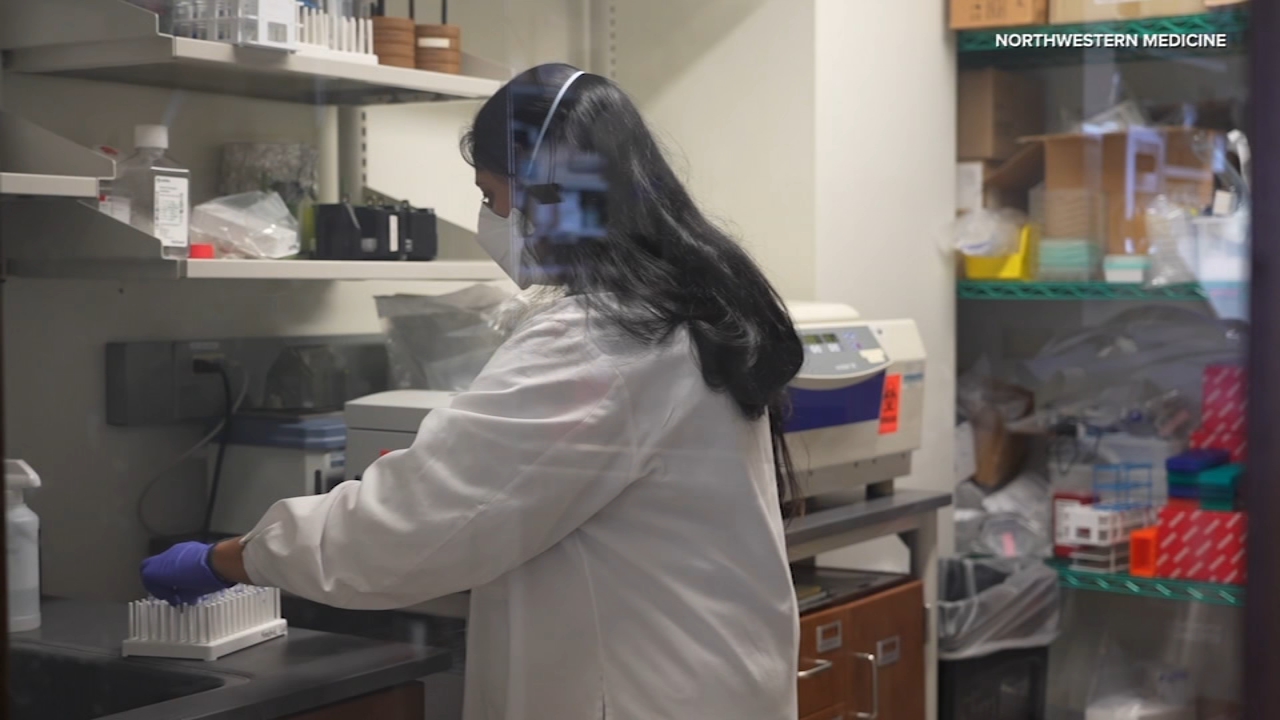
The Chicago-based research team studied post-mortem brains from 10 people with Parkinson's and 14 without.
They found the virus in the post-mortem brains of five out of 10 people with Parkinson's and none of the 14 control brains.
Now, the research team plans to find out how common the HPgV virus is in Parkinson's patients and whether it plays a role in the disease.
"One big question we still need to answer is how often the virus gets into the brains of people with or without Parkinson's," said Dr. Koralnik. "We also aim to understand how viruses and genes interact; insights that could reveal how Parkinson's begins and could help guide future therapies."
To learn more about the study, click here.