Organization of Black Aerospace Professionals celebrates 50 years, partners with American Airlines


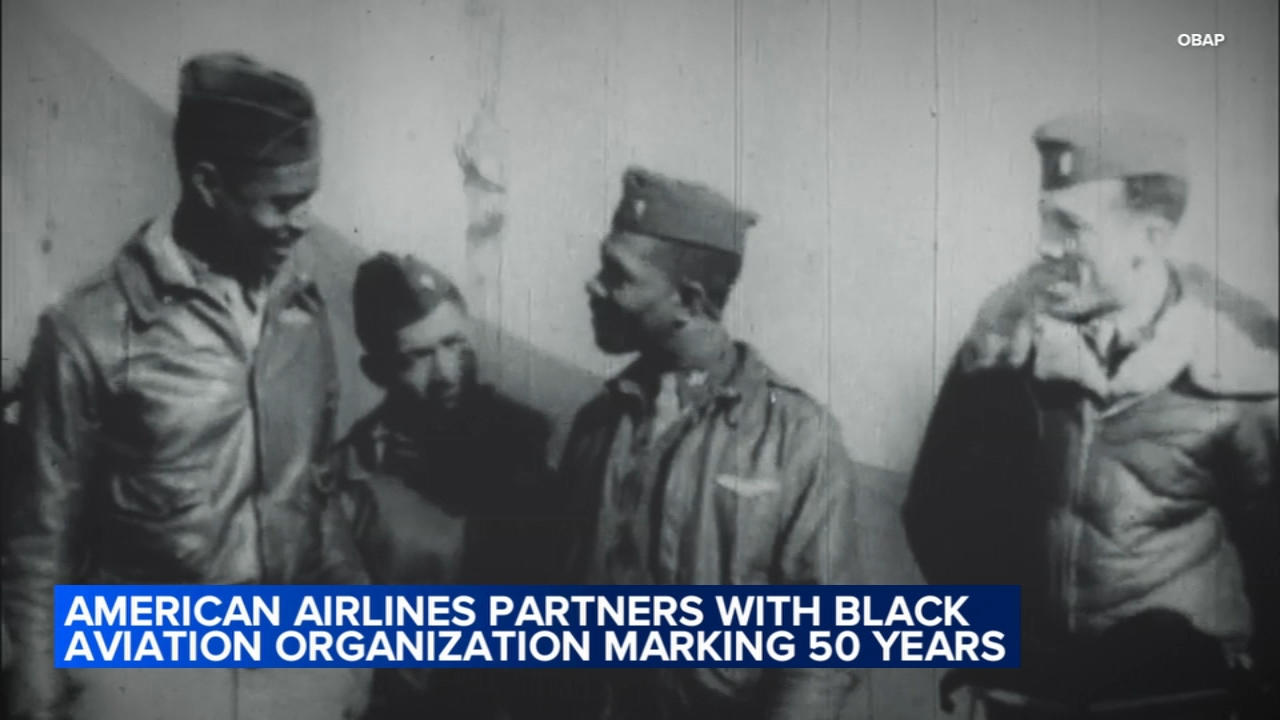
CHICAGO (WLS) -- A program created to support Black pilots is celebrating 50 years.
They've partnered with American Airlines to grow representation in aviation careers.
ABC7 Chicago is now streaming 24/7. Click here to watch
At the Hilton Chicago O'Hare Airport, 37 Black pilots began the Organization of Black Aerospace Professionals.
As they celebrate 50 years, they say they are more determined than ever to grow the numbers of Black pilots nationwide.
"At 15 years old, I was rolling down that runway with my instructor," said Capt. Beth Powell, an American Airlines pilot. "We were in charge, and it was absolutely empowering."
Powell says that was the moment she learned she could get paid to live her dream: a dream she is working to create for others like her.
"Coming to America, I didn't see anyone that looked like me during my flight training," Powell said.
By 21, Powell joined the Organization of Black Aerospace Professionals, or OBAP, a group co-founded in 1976 by David Harris: the first Black commercial airline pilot.
"As Black folks, we've had to break a lot of glass ceilings," Harris said.
SEE ALSO: Passengers recount terrifying moment plane tires blow out during landing at Atlanta airport
His mission was to bridge the gap of accessibility for the Black community in aviation careers.
According to OBAP, less than 4 percent of commercial airline pilots are Black. And less than 1 percent are Black women.
"One of the things we would like to do is get into the schools earlier, get students into our programs earlier," said Titus Sanders, OBAP program chair.
Sanders says their goal is to reach students before the age of 10. Their partnership with American Airlines is helping to do just that and mitigate the hefty financial cost it takes to be a pilot.
Becoming a pilot costs roughly $100,000 just for flight training.
And then even after that, they say you need 1,500 hours of flying experience to fly for a regional airline.
It's why American Airlines is helping to fund OBAP's Ace Academy: a one-week program exposing 1,100 teenage students to aviation careers. It's something Powell's own daughter has benefited from.
"She describes it best that it breaks you down and rebuild you. It's a transformational process for better," Powell said.
The proud mom says that's the feeling she wants for every future pilot.
"What I want for the world is no stereotype, period. We belong. We are qualified, and we are excellent," Powell said.