Lindsay Clancy trial: Watch the full closing arguments from both sides (VIDEO)
The final verdict form offers 5 possible verdicts

Editor's note: This story and video may contain disturbing material.
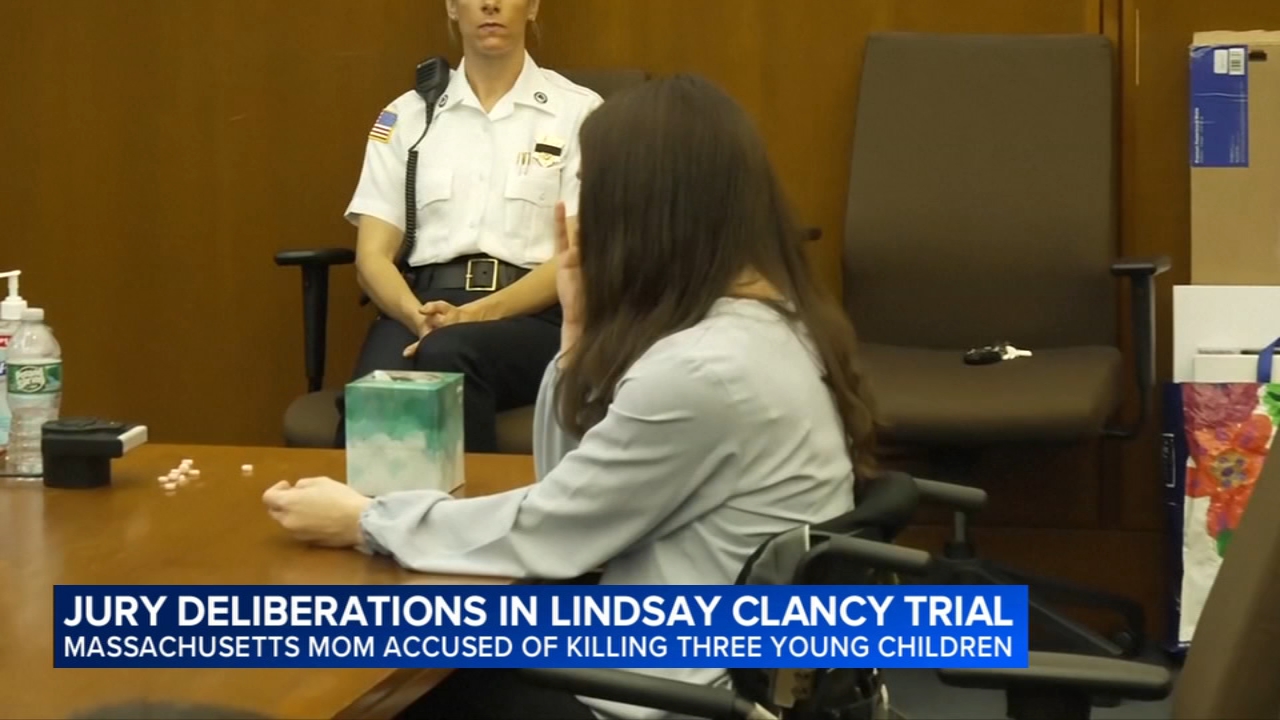
Jury deliberations are underway in the murder trial of Lindsay Clancy, the Massachusetts mom who killed her three young children while in the family's home on Jan. 24, 2023.
Clancy’s defense attorney claims she was suffering from postpartum psychosis when she strangled her children and attempted to take her own life. Prosecutors argue that Clancy -- who has pleaded not guilty to three counts of first-degree murder -- is criminally responsible for her children's deaths.
Before deliberations began, Judge William Sullivan described the verdict form to the jury. The foreperson needs to check one option for each count, which corresponds to each of the three children.
There are five possible verdicts.
Jurors have the options of Not Guilty, Not Guilty by Lack of Criminal Responsibility, Guilty of Murder in the First Degree by the Theory of Deliberate Premeditation, or Extreme Atrocity and Cruelty, Guilty of Murder in the Second Degree, Guilty of Manslaughter.
If you or someone you know is struggling with thoughts of suicide, call or text 988 or chat 988lifeline.org. Free, confidential help is available 24 hours a day, 7 days a week. You are not on your own.
Defense insists Clancy sought help repeatedly (WATCH)
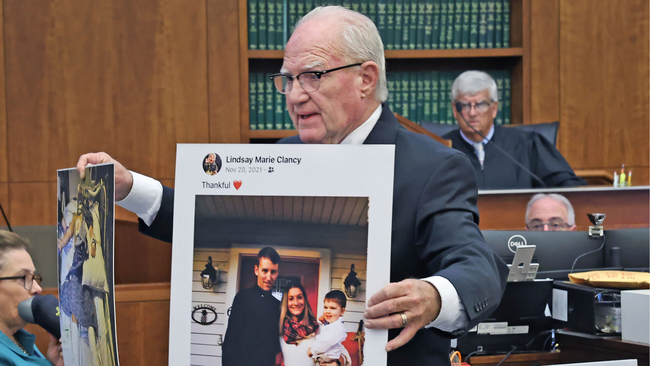
Defense attorney Kevin Reddington began his closing argument by showing the jury two photos – a happy image of the entire Clancy family next to a photo of severely-injured Lindsay Clancy on a hospital bed following her suicide attempt.
He argued that Clancy repeatedly sought help from the medical system, but that she was overmedicated and misdiagnosed.
Speaking toward the prosecution, Reddington accused them of furthering Clancy’s suffering by suggesting her suicide attempt was not serious, scrutinizing her medical records, and having experts question her state of mind. Judge William Sullivan at one point reminded Reddington to talk to the jurors.
Reddington also highlighted the evidence and testimony they presented to show that Clancy was a caring mother, suggesting she had no motive to kill her children.
“This young lady did nothing wrong in her life. She was a nurse, a daughter, a wife, and a darn good mother,” Reddington said in his closing.
Speaking toward the prosecution, Reddington accused them of furthering Clancy’s suffering by suggesting her suicide attempt was not serious, scrutinizing her medical records, and having experts question her state of mind. Judge William Sullivan at one point reminded Reddington to talk to the jurors.
Reddington also highlighted the evidence and testimony they presented to show that Clancy was a caring mother, suggesting she had no motive to kill her children.
“This young lady did nothing wrong in her life. She was a nurse, a daughter, a wife, and a darn good mother,” Reddington said in his closing.=
Prosecutor provides its theory for why Clancy killed her children (WATCH)
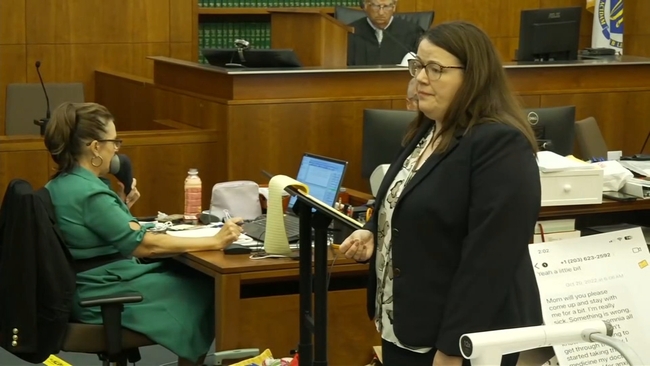
Prosecutor Jennifer Sprague confronted one of the central questions in the case: Why would a mother who loved her children kill them?
Top Stories



“She was depressed. She was exhausted. She was done. She didn’t want to try anymore. She felt damaged,” Sprague said. “But those kids, those kids were her protective factor. Those kids were keeping her from ending her misery.”
And so, Sprague said, Clancy “had to remove the protective factor.”
Sprague addsed Clancy had other options, including moving to her mother’s for more support or killing herself and leaving the kids alive.
“It was a choice to take them with her. It was a horrible choice,” the prosecutor says. “It is a choice that we don’t want to think about that a mother could make, because that doesn’t make us feel safe or comfortable in this world. But it’s a choice she made.”
Sprague said the case isn’t about the “mental health system or how it treats women.”
“That’s a distraction to get you angry and passionate about an important issue, but an issue that’s not on trial here,” she said.
The case, Sprague said, is about whether Clancy could recognize what was wrong with her actions and conform her actions to the law. In Clancy’s case, she had more support and resources than most have when navigating the American healthcare system.
“This wasn’t a woman suffering from a lack of care, a lack of resources,” she said. “She had an abundance of health, an abundance of care. She had all of that and more.”
Sprague acknowledged that Clancy sought help for her mental health struggles, but argued that she did not always take medications as prescribed or give her providers complete and accurate information.
“She wanted to get better, but she wanted to get better on her own terms,” Sprague said. “And as a nurse, she knew that’s not the right way to approach it.”
Sprague rejected the defense’s argument that Clancy did not receive the care she needed, saying her providers were working with the information Clancy gave them.
“This doesn’t mean that she wasn’t struggling, that she wasn’t dealing with these mental health issues,” Sprague said. “She had depression.”
But, she added: “They were doing the best they could with her level of cooperation and compliance with the plan.”
Sprague said Clancy’s decision not to tell her mental health providers about thoughts she had in December 2022 of harming her children shows she understood those thoughts were wrong.
Clancy disclosed the thoughts to her then-husband and to her mother, but not to her doctors, Sprague said.
Clancy feared her children could be taken away if she told a mandated reporter, Sprague said.
“That’s a rational thought,” Sprague saiid. “It also shows you that she knew it was a bad thought, a wrong thought.”
“Not only is she hiding it. She is lying about it.”
ABC News and The Associated Press contributed to this report.