Chicago mayor signs executive order to address smoking on CTA trains, buses, platforms


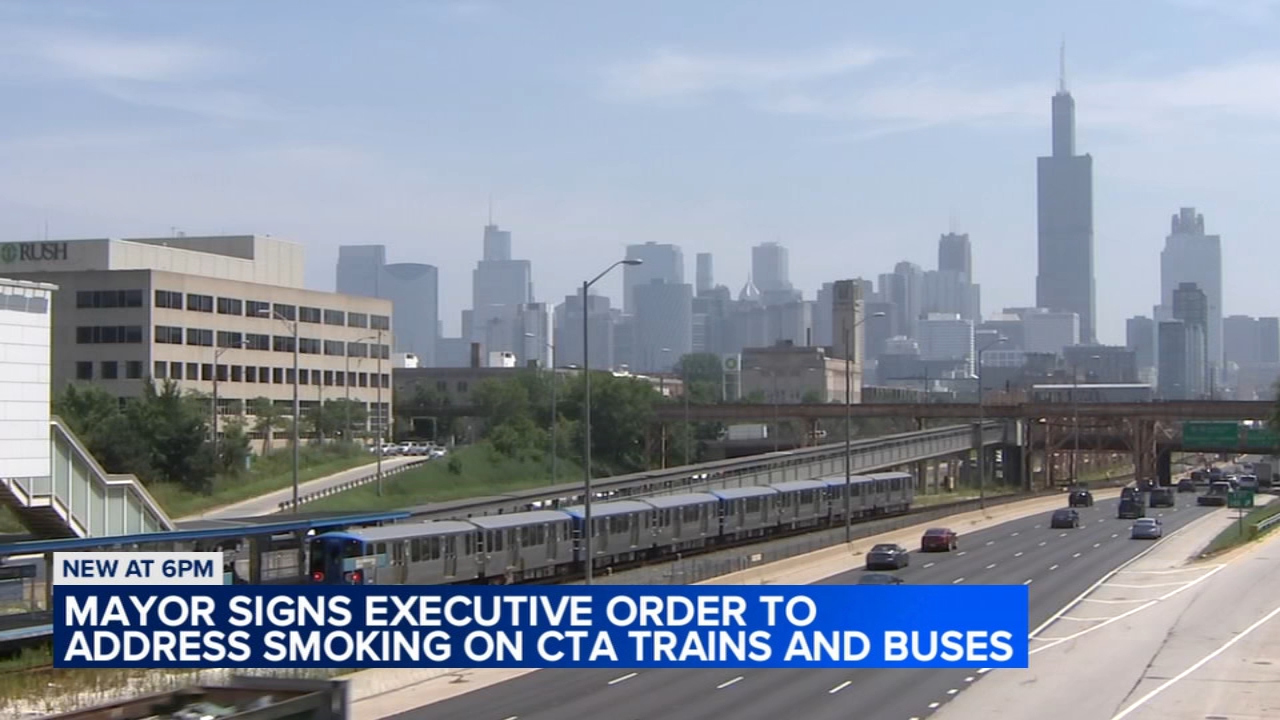
CHICAGO (WLS) -- Mayor Brandon Johnson is taking steps to address one of the biggest complaints by CTA riders: smoking on the trains and buses.
On Tuesday, he signed an executive order, calling for a multi-agency approach to address the problem. It's patterned after his approach to bringing down Chicago violence.
ABC7 Chicago is now streaming 24/7. Click here to watch
Smoking is illegal on the CTA, but regular riders say they see people lighting up all the time.
On an average weekday nearly 1 million people ride CTA trains and buses. And smoking has become a real problem.
"Weed, cigars, cigarettes, they might do hard drugs; it's like a Pandora's box type of thing," CTA rider Diamond Jones said.
Johnson signed an executive order to have various city departments work collaboratively to find ways to reduce the number of scofflaws who illegally smoke on CTA trains, buses and platforms.
"When it comes to smoking on trains, I have a simple message. It has got to stop," Johnson said.
In June, downtown Alderman Bill Conway proposed taking a data-driven approach to find the best way to try and snuff out smoking on the CTA.
SEE ALSO: Oak Park firefighters rescue snake on CTA Green Line train
"Well, CTA data shows it's riders' biggest concern, not to mention my office, which handles all the downtown 'L' stops. We get complaints daily about smoking on the CTA," said Conway, who represents the 34th Ward.
"It's every day, and it's ridiculous," CTA rider Wendy Ramsey said.
In 2023, Chicago police issued more than 6,300 citations for smoking-related violations.
But, last year, those numbers dropped significantly, with fewer than 4,100 citations.
Violators can be fined $300 or more, and could also lose ridership privileges.
The mayor's plan calls for the departments of Public Health and Family Support Services to look for new ways to collaborate, including the possible use of the CARE, or Crisis Assistance Response & Engagement Program, intervention teams, to deal with smokers.
"Well, I appreciate the mayor taking this seriously, but I do think we need to have a data-driven approach to handle this problem. I'm not sure the CARE teams are really the right avenue here to where you essentially will have social workers telling smokers to stop smoking," Conway said.
"It's not just social workers and behavioral health counselors. It's also coming together collectively to think about ways in which we can strengthen our strategies for stronger enforcement," Johnson said.
The mayor's new approach also includes increasing public awareness campaigns, and he said he's looking for recommendations for short-term and long-term solutions that could one day lead to a smoke-free public transportation system.