Harvey expands police surveillance network with Flock camera technology amid privacy concerns

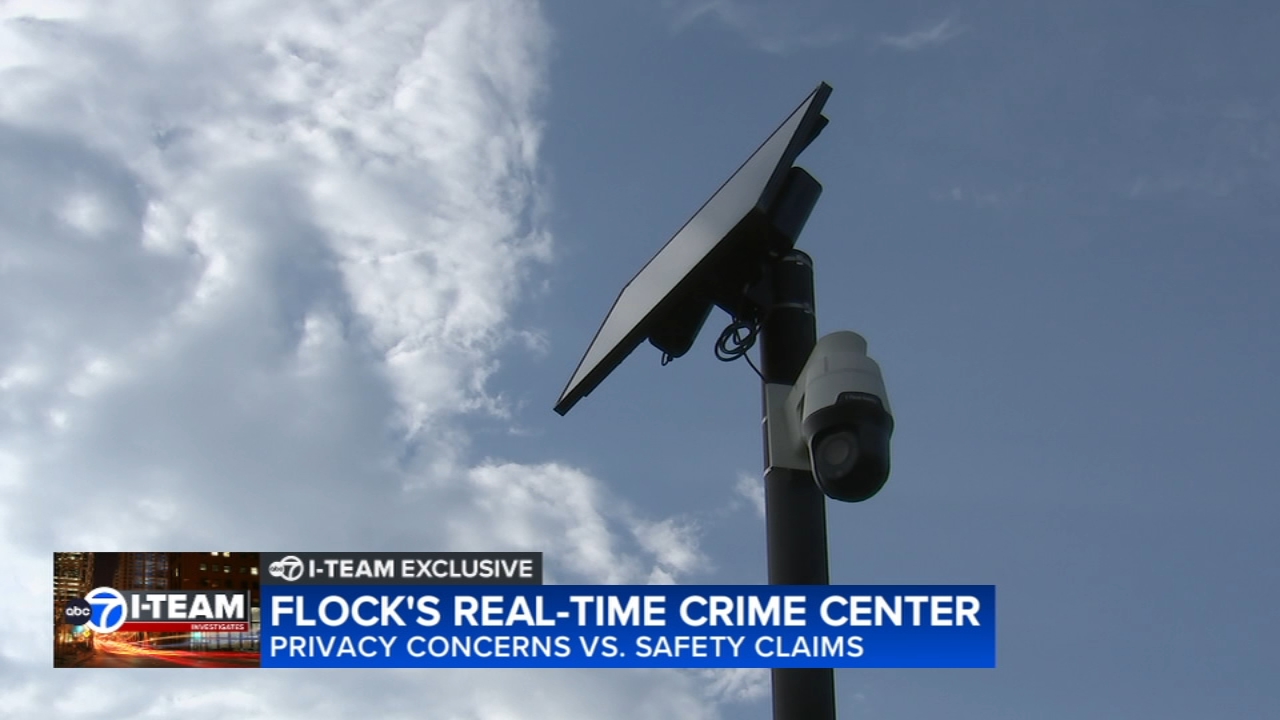
HARVEY, Ill. (WLS) -- While some cities are canceling contracts with police surveillance giant Flock, the south suburban city of Harvey is embracing it.
Harvey law enforcement gave the ABC7 I-Team the first look at its new real-time crime system, demonstrating how the suite of surveillance technology works. Officials said it is helping improve public safety and emergency response, while critics continue to raise concerns about privacy and the potential for misuse.
ABC7 Chicago is now streaming 24/7. Click here to watch
Inside the slick new center police demonstrated how it was used it to search for a downed power line following storms earlier this week. Police Chief Dale Mitchell said the drone has been used alongside the fire department and public works crews to identify hazardous conditions, including flooding, fallen trees and damaged electrical lines.
"We had a series of recent storms and the cameras and the drone was used to look for those unsafe areas, flooding streets that were impassable, trees that were down, electrical lines that were down, where if we were just trying to use city personnel, it would take us a lot longer time, maybe hours and hours, whereas we can use our network of cameras and the drone to search those areas for those dangerous conditions," Mitchell said.
Harvey's real-time crime center includes live video cameras with pan, tilt and zoom capabilities, automatic license plate readers, gunshot detection technology and a semi-autonomous drone. The integrated surveillance network is powered by Flock and covers the city of about 20,000 residents.
Mayor Shirley Drewenski said the system has applications beyond policing.
"The real time Crime center is not only based on crime, but also our personal safety. This unit is used through the fire department, our street department," Drewenski said.
Mitchell said the technology is intended to monitor locations rather than individuals.
"I want to stress, we're watching places. We're not watching people. And we can't watch every camera all the time. We focus our attention on those people that have committed a crime," he said.
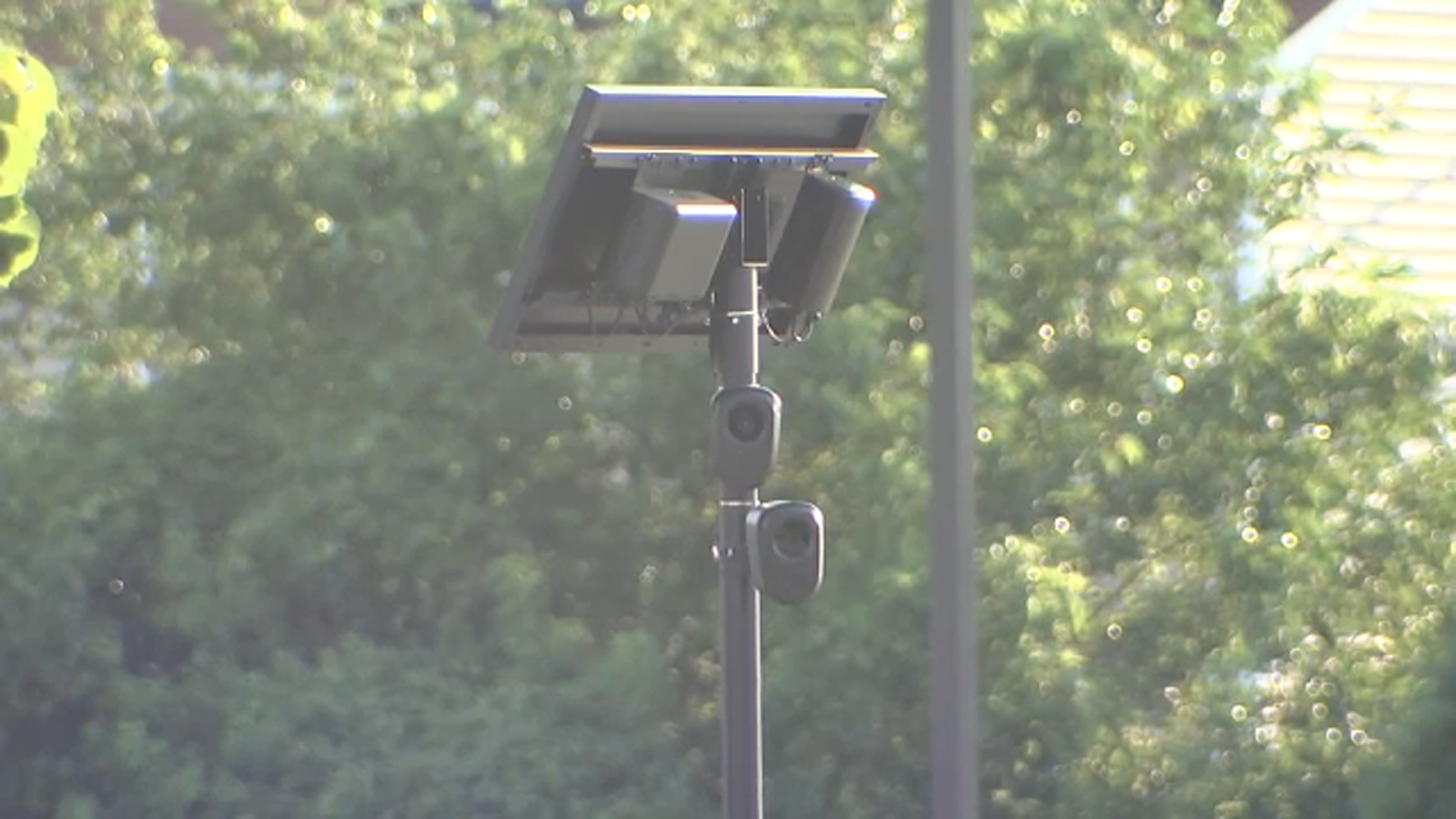
Harvey officials said the city is the first in Illinois to receive a Flock Safe City designation and has deployed nearly every surveillance product offered by the company, funded through grants.
Asked whether the technology has reduced crime, Mitchell said, "The data shows that we've seen a reduction in crime. ... one of the biggest benefits of this technology. It reduces the time for when we respond, and it reduces the time from recognizing those conditions that are unsafe."
Police said reductions have been seen in several crime categories, including robberies and homicides. Mitchell also confirmed that Flock technology has been used in the investigation of a double homicide last month that remains unsolved.
Police also said traffic citations have increased.
Real-Time Crime Center Director Cameron Biddings said the technology improves situational awareness for officers.
"It's been very beneficial. We'll be able to survey the land, be able to see what's going on, give that information in real time to our officers in our dispatch center and be able to have them respond accordingly," Biddings said.
RELATED | Raging debate around use of license plate readers: Are they advancing safety or violating privacy?
The expansion comes as privacy advocates continue to question the growing use of police surveillance technology. Critics have raised concerns about the ability to track people's movements without a warrant and about the possibility of misidentification through video analytics and license plate reader systems.
According to Harvey police, live video feeds and license plate reader data are retained for 30 days unless connected to an ongoing investigation. Police also have the ability to search live and recorded video using identifiable characteristics, such as clothing color or whether someone is carrying a backpack.
Beryl Lipton, senior investigative researcher with the Electronic Frontier Foundation, a digital rights nonprofit, said questions remain about the reliability and oversight of the technology.
"How often are people misidentified and charged with crimes they didn't commit or are now subject to a criminal investigation because video analysis surfaced them in one of these platforms," Lipton said.
She is imploring community members to get involved in the conversations about the trade-offs between public safety and the right to privacy and she joins of chorus of other privacy advocates calling for better transparency and oversight.
"What communities should continue to expect is that is access to some of these transparency portals or to some of the oversight mechanisms that have been put into place," Lipton said. "I think it remains incredibly important that law enforcement is transparent about the way that they're deploying these tools."
Flock has also faced scrutiny elsewhere. The I-Team reported that Los Angeles paused its contract with the company over vehicle misidentification concerns involving automatic license plate readers. The report also noted that officers in multiple jurisdictions have been disciplined for alleged misuse of Flock technology and that some cameras have been vandalized, including incidents that led to charges against three men in DuPage County.
Flock spokesman Paris Lewbel said the company has added new safeguards designed to detect improper use.
"Earlier this year, we built our audit assistance, or we released audit assistance tool that automatically flags any suspicious searches to command staff so they can conduct an investigation," Lewbel said.
He said vandalized cameras can affect investigations.
"Every time a camera is damaged, it means that camera's going offline. And that means that has an impact on the local police department being able to use it as part of an investigation," Lewbel said.
Harvey police are aware of the privacy concerns and insist the technology is largely intended to help identify criminal activity, locate suspects and eliminate innocent people from investigations.
"We're not looking for anybody individually unless they've committed a crime or they're committing some type of act that's unsafe," Mitchell said.
Harvey police declined to disclose the number of cameras installed throughout the city but said the city owns all of its data and that it cannot be shared or used without permission. Flock told the I-Team that it does not use facial recognition technology and has no such technology currently in development.