Pritzker proposes $56B budget with minimal new spending, tax on social media companies
State faces challenging financial future amid federal funding cuts and new mandates
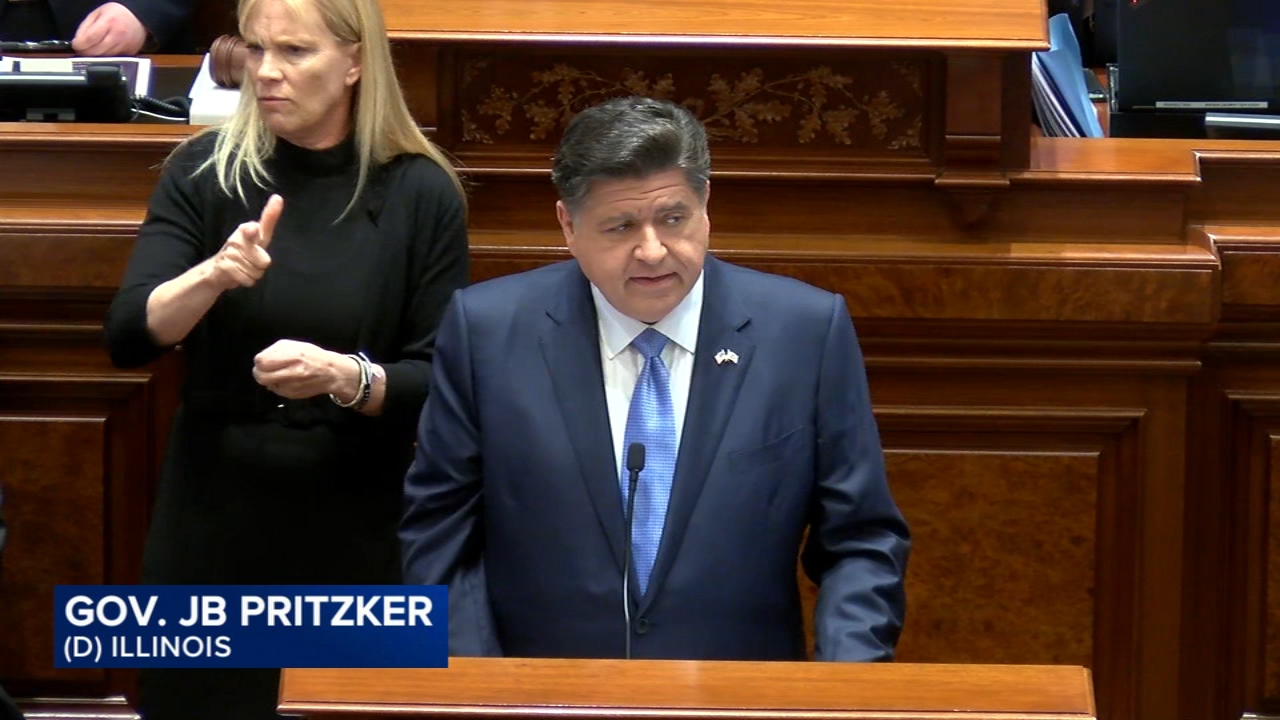
SPRINGFIELD, Ill. -- As Illinois awaits federal court decisions about federal funding and braces for more federal cuts and rising costs, Gov. JB Pritzker is proposing limited new spending.
The budget proposed by Pritzker in his State of the State address on Wednesday largely maintains the status quo, and forgoes significant broad-based tax increases.
ABC7 Chicago is now streaming 24/7. Click here to watch
The proposed budget totals $56 billion in spending in fiscal year 2027 beginning on July 1, which is up $878 million, or 1.6% from the current year. But most of that news spending is in required categories like education and pensions. Outside those areas, new spending will grow by just 0.5%.
"Prudence demanded that this year's budget proposal seeks a discretionary spending increase that is less than one half of one percent. It levels off, and in some cases reduces programs that are important to me - some of which were proposals of my own," Pritzker said.
On the revenue side, the governor is expecting $56.1 billion in FY27, which would be an increase of $830 million from current-year projections.
Like the last two budgets, Pritzker is again opting for targeted tax increases that will be paid by businesses rather than consumers. His proposal does not include new taxes on millionaires and billionaires and corporations sought by progressive Democrats.
Pritzker's administration is also assuming it will win court battles to continue receiving federal funding that President Donald Trump's administration has attempted to cut. About $1 billion is currently in limbo as the state sues to continue receiving funding, according to the governor's office.
RELATED: Pritzker to present 8th budget as Illinois faces federal funding uncertainty
Pritzker did cast a lot of blame on President Trump during his speech.
"If you want to talk about our fiscal year 2027 budget, you must first demand the return of the money and resources this president has taken from the people of Illinois," he said. "Unlike the federal government, every year Illinois must balance its budget. When Donald Trump is taking resources away that are rightfully ours, none of us - Democrats or Republicans - should be OK with that."
Republicans said Pritzker's comments seemed more like a presidential campaign speech.
"Gov. Pritzker and his Democrat allies need to stop blaming President Trump for the problems that they themselves have created: record spending, billions in new taxes and fees," said Norine Hammond, deputy minority leader, R-Macomb.
"I thought he did a great job of laying out the challenges before us. I thought he did a good job of making sure that we were presented a budget that was responsive. It was forward-focused, but it also met the challenge of the moment," said state Sen. Elgie Sims, budget negotiator, D-Chicago.
Pritzker also called for a moment of silence to honor the Rev. Jesse Jackson Sr., who died Tuesday.
"Yesterday, we lost a giant who spent his life on the front lines of the Civil Rights Movement. He broke down barriers, inspired generations and kept hope alive," Pritzker said.
Little new spending
While overall spending in the budget grows by hundreds of millions, lawmakers and advocates who wanted Pritzker to propose spending big chunks of money on new services this year did not have their wishes granted.
But the governor's office said the proposal also does not include major cuts to programs.
Funding for K-12 public schools via the state's Evidence-Based Funding formula will increase by $305 million and, for the second year in a row, excludes roughly $50 million that would be designated for property tax relief.
Fiscal year 2027 will also be the first year the new Department of Early Childhood begins full operations. Funds previously allocated through the State Board of Education, Department of Human Services and Department of Children and Family Services will be consolidated under one roof.
The state's universities and community colleges will also see just 1% growth in spending for the second year in a row under the plan. The Monetary Award Program, more commonly known as MAP, will have funding remain flat at $721.6 million.
A program that provides health care to immigrant seniors regardless of whether they're living in the U.S. with legal permission is also remaining in the budget, despite pushback from Republican lawmakers. The program was significantly scaled back in the FY26 budget and limited only to qualifying seniors and is projected to cost $143.6 million in FY27. Last year's budget cut a similar program for immigrant adults.
"We won't let headwinds from Washington stop us from addressing the fact that Illinoisans, like Americans everywhere, are still paying too much for groceries, too much for housing, too much for electricity, too much to live. Everything is just too damned expensive," Pritzker said.
"Well, that didn't happen because of who's our president today. Affordability starts with control and spending, and that comes with better policy. You don't lower the cost by growing government. We do it by growing our state," said state Rep. Tony McCombie, House Republican Leader.
Tax on social media companies
Pritzker's plan calls for raising $589 million in new revenue.
The hallmark of the plan is a new tax on social media companies with at least 100,000 users in Illinois. The companies would be taxed on a graduated scale beginning at 10 cents per user each month. Platforms with a million or more users would be taxed $165,000 each month, plus 50 cents each month on the number of users over a million.
Pritzker is hoping to raise $200 million from the new tax - a more limited amount than a digital advertising tax floated last year that would have racked in hundreds of millions of dollars each year.
"Those companies are profiting from online engagement of Illinois consumers, and they currently contribute nothing to ameliorate the negative effects of their platforms," Pritzker said.
He also called for more regulation on social media to protect young people and a ban on cell phones in schools with some exceptions, calling them an interference to education.
Pritzker's plan would also raise new funds by adjusting a cap on operating losses reported by businesses and aligning taxes on table and electronic games with each other.
For the current fiscal year, the governor's office expects revenue to be about $70 million lower than was first projected when Pritzker signed the budget last June.
The Civic Federation called the governor's budget proposal a prudent starting point during this time of uncertainty, but said negotiators need to take into account the impact on local governments.
The governor is also calling for a state law that would allow for more so-called granny flats by removing local zoning restrictions. It's part of his larger push for more affordable housing in this budget.
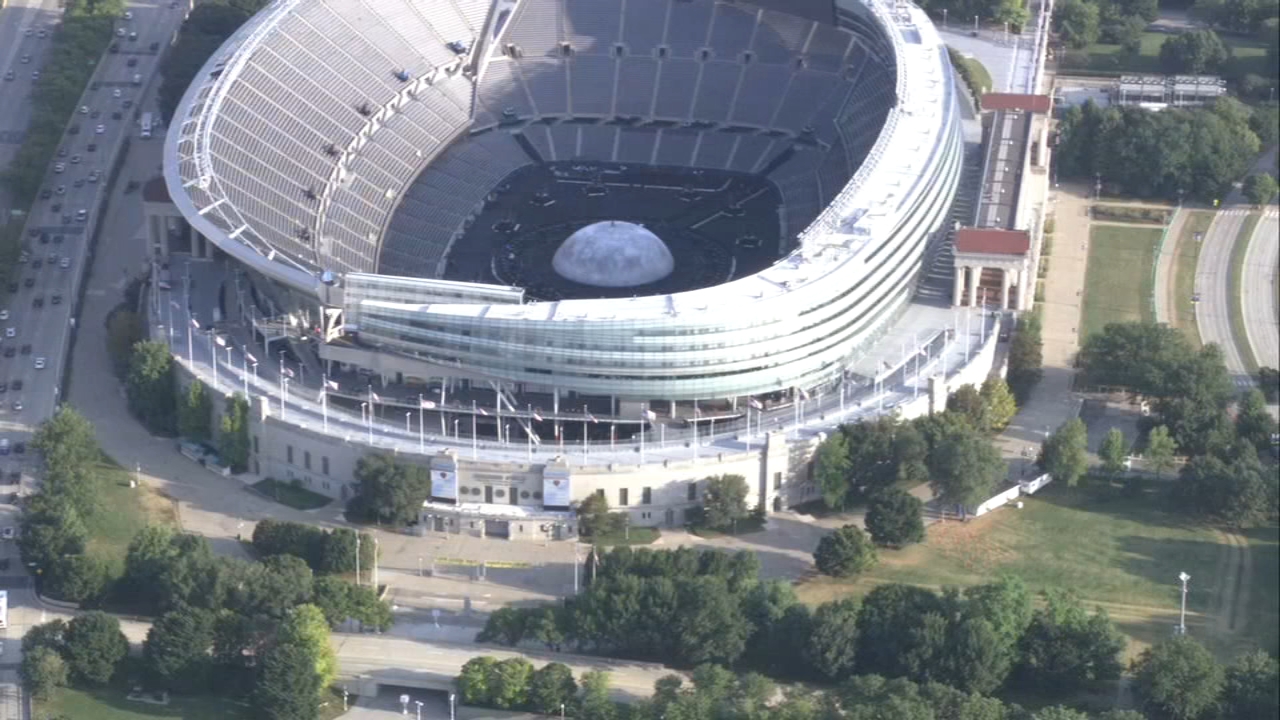
And Pritzker said progress is being made for the new Chicago Bears stadium in Arlington Heights.
Lawmakers are ready to get to work.
"Listen, every budget is difficult because you have to balance a whole lot of different priorities, but we manage to get it done," House Speaker State Rep. Emanuel "Chris" Welch said.
The goal is to pass a balanced, responsible and compassionate budget by May 31, Democrats say.
ABC7 Chicago's Craig Wall contributed to this report.
Capitol News Illinois is a nonprofit, nonpartisan news service covering state government. It is distributed to hundreds of print and broadcast outlets statewide. It is funded primarily by the Illinois Press Foundation and the Robert R. McCormick Foundation, along with major contributions from the Illinois Broadcasters Foundation and Southern Illinois Editorial Association.