New Northern Illinois Transit Authority board prepares for first meeting as riders seek improvements


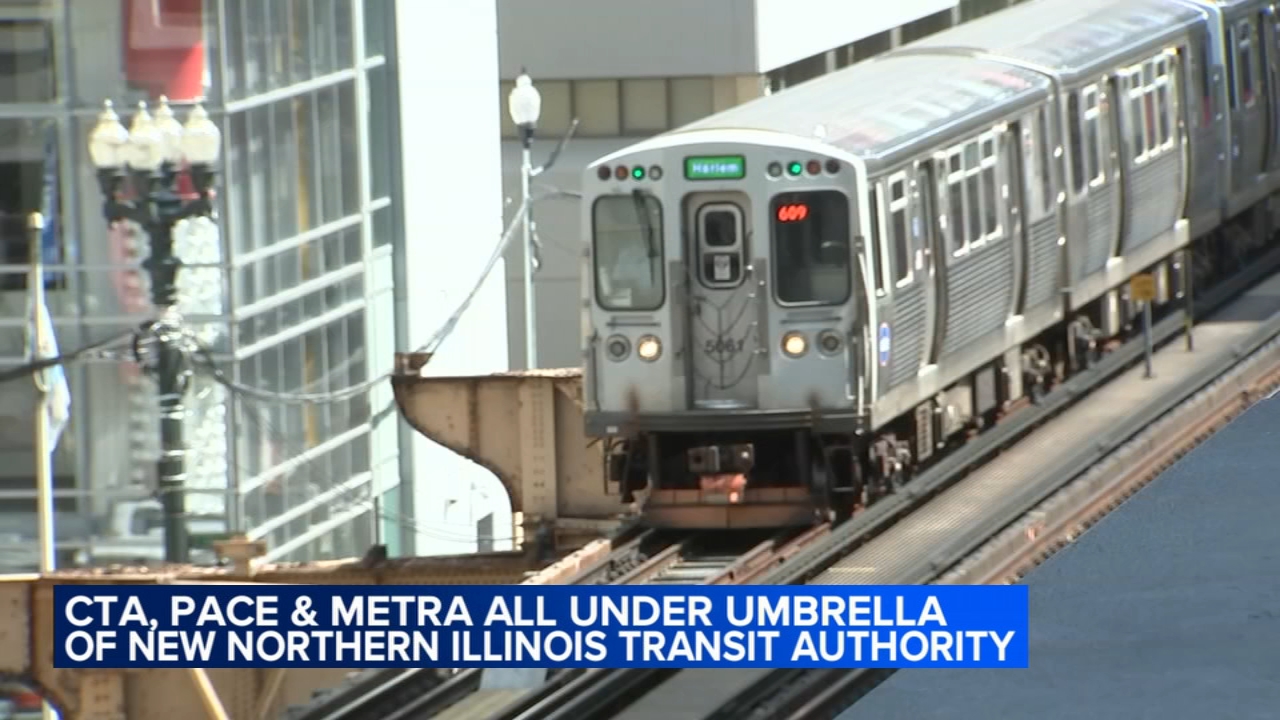
CHICAGO (WLS) -- A new agency created to oversee public transit across Chicago and the surrounding region is taking shape, with the 20 members of the Northern Illinois Transit Authority now named and the board scheduled to hold its first meeting next week.
The Northern Illinois Transit Authority, or NITA, was created to bring greater coordination and accountability to the Chicago Transit Authority, Metra, and Pace. Its leaders say the new governance structure is intended to improve service for riders across the region.
ABC7 Chicago is now streaming 24/7. Click here to watch
For CTA rider Chanda Rice, who uses the Blue Line four days a week, reliable transit service remains a key concern.
"I take the Blue Line. It's the most convenient way to travel into the city," Rice said.
Rice said service has changed since before the COVID-19 pandemic.
"It gets kind of annoying when I get to the station and I got to wait like 15 minutes for a train. Like that was unheard of pre-pandemic," she said.
The pandemic altered commuting patterns as many companies allowed employees to work from home, changing ridership trends on CTA, Metra, and Pace. With public transit facing a projected $230 million budget gap in 2026, state lawmakers created NITA and provided it with more than $1 billion in annual funding.
"Our region moves on transit. It's an economic development issue," said Maulik Vaishnav, chief transition officer for the Northern Illinois Transit Authority. "When we were looking at the doomsday scenarios, and riders wouldn't have options to get to their doctor's appointments, to work, to enjoy. It has a ripple economic impact across our network."
Rather than relying on service reductions or fare increases, the legislation redirects revenue from the motor fuel sales tax and raises additional funding through a 0.25% increase in the regional sales tax across the six-county Chicago region. NITA leaders say the funding will help streamline and expand service across CTA, Metra, and Pace.
"Expansion of CTA's frequent bus network is already happening," Vaishnav said. "Additional weekend service across the region. Post-pandemic riders want to travel differently. They're traveling a lot more in off-peak and on weekends, so more service with Pace across the six counties. Metra will start to see more regional rail-like service on Metro Electric and Rock Island."
Officials said fares will remain unchanged until the summer of 2027. NITA is also working to simplify fare payment and transfers between transit providers, with plans to launch a new payment system by 2030.
"We are trying to make sure that riders do not really have to think about it," Vaishnav said. "Right, like just get on the system, ride as you need from point A to point B. and NITA takes care of the rest with CTA Metro and Pace."
Safety remains another priority for riders.
"I prefer to take the bus rather than the train. It's a little safer," said Maritza Martinez, who rides CTA and Metra.
CTA rider Pearce Toal said he would like to see a greater security presence on the system.
"I haven't seen too many cops honestly like monitoring the train. It's mostly security guards, so maybe they could increase the safety a bit," Toal said.
Looking ahead, NITA plans to launch what it calls "transit ambassadors" next year to increase visibility across the system. The agency also plans to continue working with the Cook County Sheriff's Office, which has a task force that provides safety recommendations.
Agency leaders said specialists trained to address certain mental health issues and additional resources for people experiencing homelessness are also planned as part of broader efforts to improve the rider experience across the region's transit network.