Picking college football's top non-QB playmakers in 2026

The quarterback position is always a flashpoint around college football, especially for the 2026 season, as Arch Manning, Dante Moore, Julian Sayin, Trinidad Chambliss, CJ Carr, Gunner Stockton and others return to lead national contenders.
But QBs aren't the only playmakers in the sport. Those who play other positions, on both sides of the ball, will significantly impact moments and outcomes.
Not every playmaker listed regularly has the ball in his hands, but each affects where it often ends up. Some transferred to higher-profile programs, while others stayed put to play for new coaches. Several have already entered the conversation for national awards. A few are ready to take that step this fall.
I surveyed coaches about which players they're expecting big things from on their teams, or how they view other notables around the sport. (Note: Missouri running back Ahmad Hardy was on the original list, but his playing status is in doubt after being shot at a concert earlier this month.)
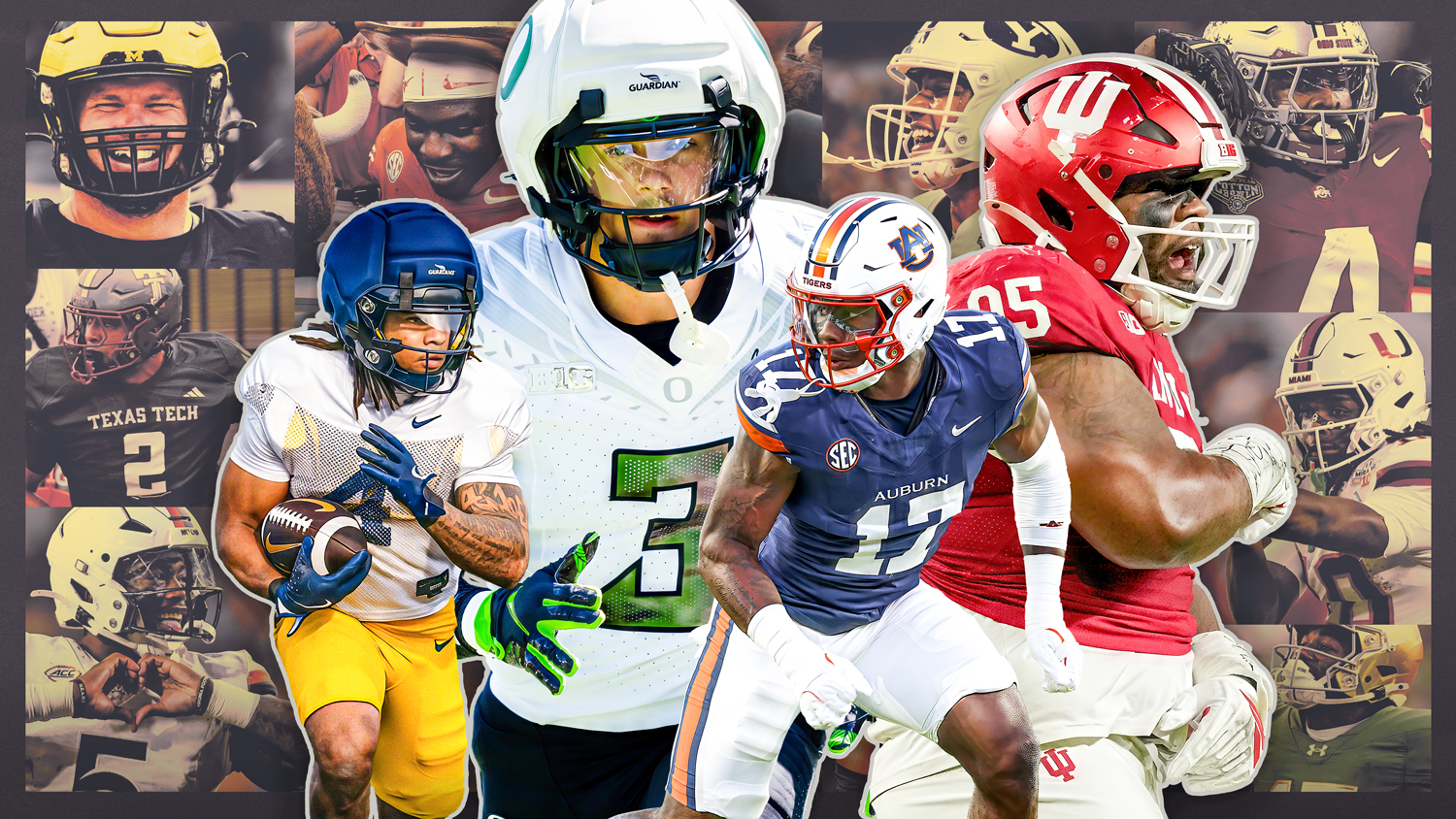
Here's a look at 15 non-quarterback playmakers to watch this fall, and what coaches are saying about them.


Malachi Toney, WR, Miami Hurricanes
- Vitals: Sophomore, 5-foot-11, 188 pounds
- 2025 stats: 1,211 receiving yards, 109 receptions, 10 TDs, 113 rushing yards
Why he's here: Toney didn't win the Biletnikoff Award, which went to USC's Makai Lemon, and wasn't even a finalist (Ohio State's Jeremiah Smith and UConn's Skyler Bell were the others). But good luck finding a more electrifying receiver at the end of the 2025 season. Toney led the nation and set a team record for receptions, and also set a team record while finishing fifth nationally in receiving yards.
The ACC Rookie of the Year was one of 16 players to record 10 or more receiving touchdowns and had five or more receptions in all but two games, including in every CFP contest. He had 10 catches for 122 yards and a score against Indiana in the national title game, and had touchdown catches in six of the final seven games.
"I see him bigger, faster, stronger and more motivated than ever before," Miami coach Mario Cristobal told ESPN. "I see him growing in a leadership role."
Toney will join Smith as the top candidates for the Biletnikoff, as Miami transitions to a new quarterback in Duke transfer Darian Mensah, who has 6,696 passing yards and 56 touchdowns the past two seasons. Miami will look for even more big plays from Toney, who surprisingly didn't have a 20-yard catch in seven games last season.
"We always like to think that the sky's the limit for our players, being limitless, and Malachi is a guy that when you say those things, he takes it to heart," Cristobal said. "He really tries to make that a reality on a daily basis. He's driven to continue to elevate the profile of this ball team."

John Henry Daley, DE, Michigan Wolverines
- Vitals: Senior, 6-foot-4, 255 pounds
- 2025 stats (at Utah): 11.5 sacks, 17.5 tackles for loss, two forced fumbles, 48 tackles
Why he's here: After transferring from BYU to Utah, Daley had only four tackles (one sack) for the Utes in 2024, but coach Kyle Whittingham liked what he saw behind the scenes. Daley then transformed into one of the nation's most productive and disruptive edges last fall, leading the nation in sacks for a stretch and rising to No. 2 nationally before sustaining a ruptured Achilles tendon in a late November game against Kansas State.
Despite missing the stretch run, Daley still finished second nationally in sacks per game (1.05) and third in tackles for loss per game (1.59). He ranked fifth nationally in edge pressure percentage (19.6%) Daley accounted for more than one-third of Utah's sacks last season. He followed Whittingham to Michigan, where he's set to replace NFL second-round draft pick Derrick Moore as the Wolverines' primary pass rusher.
"He's as hard a worker as you'll find," Whittingham told ESPN. "What makes him so good is his get-off. That's the No. 1 factor in becoming a great edge rusher. He's got an exceptional get-off, great quickness, and he's relentless. He finds a way to get home and he'll just keep coming at you, snap after snap, and just wear you out."
Daley now must adjust to a new team and league, and recapture the form he had coming off of a long injury rehab. Whittingham is hopeful Daley will be at full strength by June.
"He has attacked the rehab just like we expected him to," Whittingham said. "That's just how he lives his life. He attacks everything. He's very valuable. We have some good edge guys already, and he just adds to that group. He certainly fits the bill of a dominant pass rusher."

Kewan Lacy, RB, Ole Miss Rebels
- Vitals: Junior, 5-foot-11, 205 pounds
- 2025 stats: 1,567 rushing yards, 306 carries, 24 touchdowns, 29 receptions
Why he's here: No running back became a bigger problem for would-be tacklers than Lacy in 2025, when he led the FBS in evaded tackles (57) and finished second in broken tackles (52), while becoming one of the faces for Ole Miss' historic CFP run. After a quiet first season at Missouri where he had only 23 carries, Lacy became a featured player in coach Lane Kiffin's offense, opening with three rushing touchdowns in his Rebels debut and finding the end zone in all but one game.
He gashed Florida for 224 rushing yards and three touchdowns, and had four games with 138 or more yards against SEC opponents. Lacy contributed consistently during three CFP games, finishing with 288 rushing yards and four touchdowns.
"Kewan has a rare ability to just erase people," Ole Miss offensive coordinator John David Baker, who joined the team in early December following the coaching transition. "Somebody can be unblocked, they can be standing in the hole right where he's going, and he'll make them miss.
"For being what I thought was a smaller guy, he's always finishing forward. Very rarely does he get hit and get knocked back."
Lacy led Power 4 backs in rushing touchdowns with 24, and had seven games with multiple scores, while logging an FBS-high 306 carries. He was a Doak Walker Award finalist and will enter his junior season as the favorite.
"We've always tried to not put too many carries on one guy, and last year they just felt like this guy's so good and, 'This is the guy who got us down here, we're going to let him finish the drive,'" Baker said. "There's something to be said for Kewan being able to do that. You look at his load from last year, that's really, really hard, while also having the ability to finish drives."

Colin Simmons, Edge, Texas Longhorns
- Vitals: Junior, 6-foot-3, 245 pounds
- 2025 stats: 12 sacks, 15.5 tackles for loss, three forced fumbles, 15 quarterback hurries, 43 tackles
Why he's here: Simmons has been a pass-rushing menace and a consistent playmaker since the moment he arrived on the Forty Acres. He led the team with nine sacks as a true freshman and posted the third-highest sacks and tackles for loss (14) totals ever by a Texas first-year defender. Last season, Simmons led the SEC in sacks and tied for third in tackles for loss.
Since the start of the 2024 season, Simmons ranks second nationally in sacks, 0.5 sacks behind David Bailey, the second overall pick in April's NFL draft. He ranks fifth in edge pressures (83) during the span and tied for sixth in forced fumbles (third among defensive linemen).
"The ball finds Colin, or Colin finds the ball," coach Steve Sarkisian told ESPN. "He's able to be disruptive, rushing the quarterback in sacks. He has TFLs. He makes a lot of tackles when he's on the field. And I think that that's just football instinct showing up as he's growing and learning systematically what we're trying to do."
Simmons' next challenge is adjusting to a new defensive scheme under veteran coordinator Will Muschamp, who this spring said Simmons has worked at several positions.
"Our job is to put him in situations where people can't ID where he is all the time," Muschamp told reporters. "... He's a guy that has had tremendous success here, and sometimes that change is hard sometimes. He's embraced the growth of it and what we need to do to be successful."

Jeremiah Smith, WR, Ohio State Buckeyes
- Vitals: Junior, 6-foot-3, 223 pounds
- 2025 stats: 1,243 receiving yards, 87 receptions, 12 touchdowns
Why he's here: Smith is arguably the best overall player in the sport entering his third season. He's still seeking a Biletnikoff Award after finishing as a finalist last season and should be among the top non-quarterback candidates for the Heisman Trophy. In two seasons with the Buckeyes, he has 163 receptions for 2,558 yards and 27 touchdowns, recording three or more receptions in all but one game.
Last season, Smith reached the end zone in all but four games. While the Buckeyes' offense struggled in losses to Indiana and Miami to close the season, Smith still made a combined 15 receptions for 301 receiving yards.
"He came in from Day 1 with a seriousness to him," Ohio State coach Ryan Day said. " ... He wants to have a great third year here, but for him it's more than just playing the wide receiver position. It's going to be the impact he has on everybody else on that field."
Smith is widely projected as the first non-quarterback to be selected in the 2027 NFL draft. He has been the sport's most complete wide receiver and has 420 more receiving yards and four more touchdowns than any other player since the start of the 2024 season.

Trey White and Adam Trick, OLBs, Texas Tech Red Raiders
- Vitals: White (senior, 6-foot-2, 255 pounds); Trick (senior, 6-foot-4, 250 pounds)
- 2025 stats: White (seven sacks, 17 quarterback hurries, 10.5 tackles for loss, 53 tackles for San Diego State); Trick (8.5 sacks, 13 quarterback hurries, three forced fumbles, one interception, 12.5 tackles for loss for Miami of Ohio)
Why they're here: Texas Tech is losing the nation's best defensive front, which featured four NFL draft picks and the second overall selection inDavid Bailey. The Red Raiders needed to reload their pass rush, in particular, with Bailey and Romello Heightdeparting. Trick flashed in 2024 before becoming a full-time starter last fall and earning first-team All-MAC honors, recording two sacks at Wisconsin. He led the FBS in defensive pressures (73).
White earned first-team All-Mountain West honors in each of the past two years for San Diego State, combining for 19.5 sacks and 29 tackles for loss.
"Trey does some things with great leverage," Texas Tech defensive coordinator Shiel Wood told ESPN. "He's got some great primary moves as far as pass rush goes, and he's got some great counters to those moves, and can really read sets well. He's got a lot of ways to attack, which we love. As far as Adam Trick, effort is the hallmark of his game, the foundational principle. He's very tough, and I think he's going to do a great job in the run game for us. Out of those two players, he's going to have to take on a little bit more of the double-teams than Trey will."
Bailey and Height had "elite critical factors and traits" that are difficult to replace, Wood said, but both White and Trick bring intelligence, maturity and drive that impacts their playmaking ability.
"We knew that their floor would be extremely high," Wood said. "We knew that they would be guys that could come in and impact our defense this year, right away. They're fully capable of coming in and helping us compete to win another Big 12 title, and really meet the standard that we were able to set last year from a defensive standpoint."

Xavier Atkins, LB, Auburn Tigers
- Vitals: Junior, 6-foot, 210 pounds
- 2025 stats: nine sacks, 17 tackles for loss, two forced fumbles, 84 tackles
Why he's here: Auburn endured a tough 2025 season that led to a coaching change, but Atkins had a breakthrough performance after transferring in from LSU, and will remain on the Plains as the Alex Golesh era begins. He's a bit undersized at linebacker or edge but showed an explosiveness to reach the backfield and pressure quarterbacks. Atkins ranked third among linebackers in both sacks and tackles for loss per game (1.42).
His 17 total TFLs led the SEC and marked the third highest in a season for an Auburn player, and the most by a Tigers inside linebacker. Atkins also led the Tigers in total tackles and topped the team chart in seven of eight SEC games.
The next step is being a headliner for a largely revamped Auburn defense, which integrates several players who joined Golesh and the staff from South Florida as well as outsiders, such as linemen Cody Sigler andDa'Shawn Womack, and cornerback Andre Jordan Jr.
"Xavier was obviously an All-American that is still young, that is still trying to figure out who he is and what it is to lead, what that really looks like," Golesh said. "He's a perfect fit for our system. His physicality has really grown."

Cam Cook, RB, West Virginia Mountaineers
- Vitals: Senior, 5-foot-9, 202 pounds
- 2025 stats (at Jacksonville State): 1,659 rushing yards, 16 touchdowns, 295 carries, 30 receptions
Why he's here: After two seasons at TCU, Cook exploded last season for Jacksonville State, leading the FBS in rushing with at least 75 yards in every contest. He reached the end zone in all but two games and showed consistency and durability, while also leading the FBS in runs of 10 yards or longer with 54, 11 more than any other ball carrier.
Cook excelled both before and after first contact, finishing third nationally in yards after contact (1,075) and sixth in yards before contact (584). He broke or evaded 91 tackles, tied for the fifth most nationally.
"When there was an opportunity for the first guy to make a tackle, he almost always made [the opponent] miss, or got by him," West Virginia coach Rich Rodriguez told ESPN. "He has got a knack to not just get what's there, but get a little bit more all the time. Inevitably, there's going to be somebody unblocked, whether it's a safety or a linebacker, and if you want to turn a 5-yard run into a 25-yard run, you've got to make that guy miss, and he has a great skill set of doing that."
Rodriguez hasn't had many backs quite like Cook, who is quick and strong but not overly big, although there are some similarities with Tre Stewart, whom Rodriguez coached at Jacksonville State in 2024 and who ranked fifth nationally in rushing (1,638 yards).
"Tre's greatest attribute was you had to tackle him to bring him down, he wasn't just going to fall," Rodriguez said. "The same way with Cam. He's not just going to go down with a shoulder bump. He's a proven commodity to me. When you have a one-year guy like that, you hope he's a plug-and-play, and that's what we think he is."

Kam Robinson, LB, Virginia Cavaliers
- Vitals: Senior, 6-foot-2, 235 pounds
- 2025 stats: two interceptions returned for TDs, one blocked kick, one safety, one fumble recovery, 64 tackles, 25-yard punt return
Why he's here: Limited to only eight games last season, Robinson still stood out for a Virginia team that surged to the ACC championship game and finished No. 16 nationally. He became the only FBS player in the past 20 years with a blocked punt, an interception return for a touchdown and a fumble recovery in the same season. Robinson also became just the second Cavaliers player to record multiple pick-sixes in a season.
His game-changing plays have also come at critical times. Virginia surprisingly found itself on the ropes at home against Washington State, when Robinson recorded a safety in the fourth quarter that proved to be the difference in a 22-20 win. He had a team-high 10 tackles and broke a 14-14 tie in the third quarter at Louisville with a 47-yard interception return for a touchdown, as Virginia eventually won 30-27 in overtime.
"He's playing a position where I don't know if you usually see that kind of athleticism," Virginia coach Tony Elliott told ESPN. "He sprints with the wideouts, he'll turn around and play DB in the one-on-ones when they're out there messing around. There's not a whole lot the young man can't do."
Elliott thinks Robinson has the right body frame at the right position, but before Robinson tore his ACL in a Nov. 15 game at Duke, the team was examining some pass-rush packages for him.
"I don't try to pump kids up, but I think the kid's got the ability to be an all-conference player, and ACC Defensive Player of the Year, if he can stay healthy," Elliott said. "Obviously, he has got to have some support behind him, but he has got that caliber of ability."

Tyrique Tucker, DT, Indiana Hoosiers
- Vitals: Senior, 6-foot, 307 pounds
- 2025 stats: 6 sacks, 12 tackles for loss, two pass breakups, 40 tackles
Why he's here: Most of the so-called JMU crew -- the group that followed coach Curt Cignetti and the staff from James Madison to Indiana -- has moved on after helping IU to a once-unthinkable national championship. But Tucker is still in Bloomington, where he holds an integral role because of his playmaking ability and leadership skills.
"I'm holding down the fort," he said this spring.
Tucker earned third-team AP All-America honors last season, tying for third in sacks among primary defensive tackles and tying for first in pass-rush sacks created (8). He had at least one-half tackle for loss in nine contests and opened Big Ten play with two sacks against Illinois in a blowout win. Among primary defensive tackles, he tied for fourth nationally in pressures last season (28) and ranked fifth in pass rushes from the defensive tackle position (347).
"He was a rotational player my last year at JMU, and came in and made the rotation my first year [at Indiana] as a starter, and really has developed," Cignetti told ESPN. "We give our D-linemen a lot of freedom, depending on whether it's a down block or a back block or a pull, to do some things, and Tyrique is really dedicated to it. He's explosive, good, low center of gravity, he has got short-area quickness and good change of direction."

LJ Martin, RB, BYU Cougars
- Vitals: Senior, 6-foot-2, 225 pounds
- 2025 stats: 1,305 rushing yards, 226 carries, 12 touchdowns, 36 receptions
Why he's here: The reigning Big 12 Offensive Player of the Year keeps a relatively low profile in Provo, and the significance of his return might not be fully appreciated nationally until the season starts. He plays a position where many players rush to the NFL but Martin will instead rejoin his BYU teammates as they chase the school's first CFP appearance. Martin's production has increased in each of the past two seasons, and last fall he nearly doubled his rushing total from 2024 despite missing BYU's bowl game and most of a regular-season contest against Iowa State with a shoulder injury that required surgery in December.
At full strength, Martin has the size and consistency to wear down defenses. Before the injury, he eclipsed 100 rushing yards in five of the first seven games with 90 yards in another, and he still reached the end zone in each of BYU's last four contests, finishing with 236 carries.
"I'm a bigger back, and you don't see many backs my size," Martin told ESPN this spring in Provo. "That helps me out a little bit in terms of workload."
Martin's role in the passing game increased late last season, as he had 25 receptions in BYU's final five contests, and another step there could be coming this fall.
"He's just continuing to be a complete, every-down player," Cougars offensive coordinator Aaron Roderick told ESPN. "He's obviously a great running back between tackles. He's a good pass protector, and I think this year we're going to use him a little more as a route runner. That would be the next step, diversifying what we do with him in the passing game, because he's an excellent receiver."

Leonard Moore, CB, Notre Dame Fighting Irish
- Vitals: Junior, 6-foot-2, 197 pounds
- 2025 stats: five interceptions (one returned for TD), seven pass breakups, one forced fumble, 31 tackles
Why he's here: Moore's two-year statistical totals are numbers that most college defensive backs would crave for their entire careers. He already has 25 passes defended -- seven interceptions and 18 pass breakups, while adding three forced fumbles -- despite opponents increasingly avoiding him in their passing schemes. Moore has the quickness and length to shut down top wide receivers and also make plays on the ball when it's thrown his way.
A consensus All-America selection, Moore was a finalist for the Bronko Nagurski Trophy and Jim Thorpe Award in 2025, after earning freshman All-America honors the year before. He became the first Notre Dame player since 2023 to record multiple interceptions in a game when he had two against Boise State, while adding a forced fumble.
"I like his name to be pretty quiet. That means people are staying away from him and he's doing what he's supposed to do," Irish defensive coordinator Chris Ash said of Moore. "After the last year and a half that he's played, not a lot of people are going to continue to go at him."
Moore told ESPN that he's focused on starting the season stronger, and becoming better against two-minute offense and other situations.
"Against Miami, he wasn't Leonard Moore as we know him and as he's capable of being," Ash said. "He knows that, and he's got to make sure this offseason that he elevates his play, he elevates his consistency, and when he's against great competition early on, he's at his best."

Koi Perich, S/Returns, Oregon Ducks
- Vitals: Junior, 6-foot-1, 200 pounds
- 2025 stats (at Minnesota): 82 tackles, one interception, one forced fumble, one sack, five rushes, seven receptions, 499 kick return yards, 118 punt return yards
Why he's here: Perich has shown in his first two college seasons that he can impact games in multiple ways, and he now joins an Oregon team seeking its first national title. Although Perich's numbers in 2025 didn't pop as much as they did the previous year -- he had five interceptions at Minnesota and became the first FBS freshman since 1976 to record 100 or more punt return yards, 100 or more kick return yards and five interceptions in a season -- he still produced at safety and returner, while moonlighting at times with the Gophers' offense.
Despite playing primarily on defense, Perich finished second on Minnesota with 742 all-purpose yards last season after finishing fourth with 565 yards in 2024.
"He loves the game, very cerebral," Oregon coach Dan Lanning described Perich. "He's a guy who focused on the things that matter for him. He's picking it up quickly, he's self-aware. There are some real great traits there that allow him to be good."
Perich frequently will be compared to the player he's replacing,Dillon Thieneman, who also left a Big Ten school(Purdue) to play for Oregon, where he became an NFL first-round draft pick. Thieneman had two interceptions and five pass breakups for the Ducks last fall.
"They're similar with the amount of football they've played, how much they love football, and what it means to them," Lanning said. "You know, what the drill looks like, how intense they are, the time put in. But there's a different skill set for both those guys."

J'Mond Tapp, DL, Memphis Tigers
- Vitals: Senior, 6-foot-3, 256 pounds
- 2025 stats (at Southern Miss): 7.5 sacks, 12 tackles for loss, 10 quarterback hurries, 70 tackles
Why he's here: Tapp has had quite a college journey, starting his career at Texas as a top-175 recruit, before transferring to Arizona State, Southern Miss and now Memphis, following coach Charles Huff there. He earned first-team All-Sun Belt honors in 2025 and will help a Memphis pass rush featuring a bunch of new faces.
Although Tapp primarily plays on the edge, he slimmed down significantly after playing last season at 275 pounds and brings versatility to the line. He ranked 12th nationally in defensive pressure percentage, recording 43 pressures when lined up at edge and 13 at tackle. He tied for fifth in caused sacks (initial pressure causing sacks, including a player's own) with 11.
"Last year, he played really, really hard and disruptive, and he made a lot of plays because of it," Huff told ESPN. "This year, he's starting to play the game mentally as hard and as disruptive. He's recognizing formation tendencies and backfield alignments and tackle sets. Last year, he was just, 'The ball's snapped and I'm going to run straight ahead as hard as I can, and when I open my eyes, I'm probably going to be in the backfield.'
"Now he's a lot more cerebral."
Tapp has spent the offseason working with former NFL assistant Bryan Bing, whom Huff hired as a senior analyst, refining Tapp's stance, hand placement and other elements.
"People aren't just going to single-block him anymore," Huff said. "He's going to have to beat some double-teams, he's going to get chipped, he's going to get sprinted away from, he's going to get run to with two pullers. He's going to get treated like a playmaker, and he's going to need the cerebral piece to continue to make plays."
]