RTA Board shifts $74M from Metra, Pace budgets to CTA as fiscal cliff looms

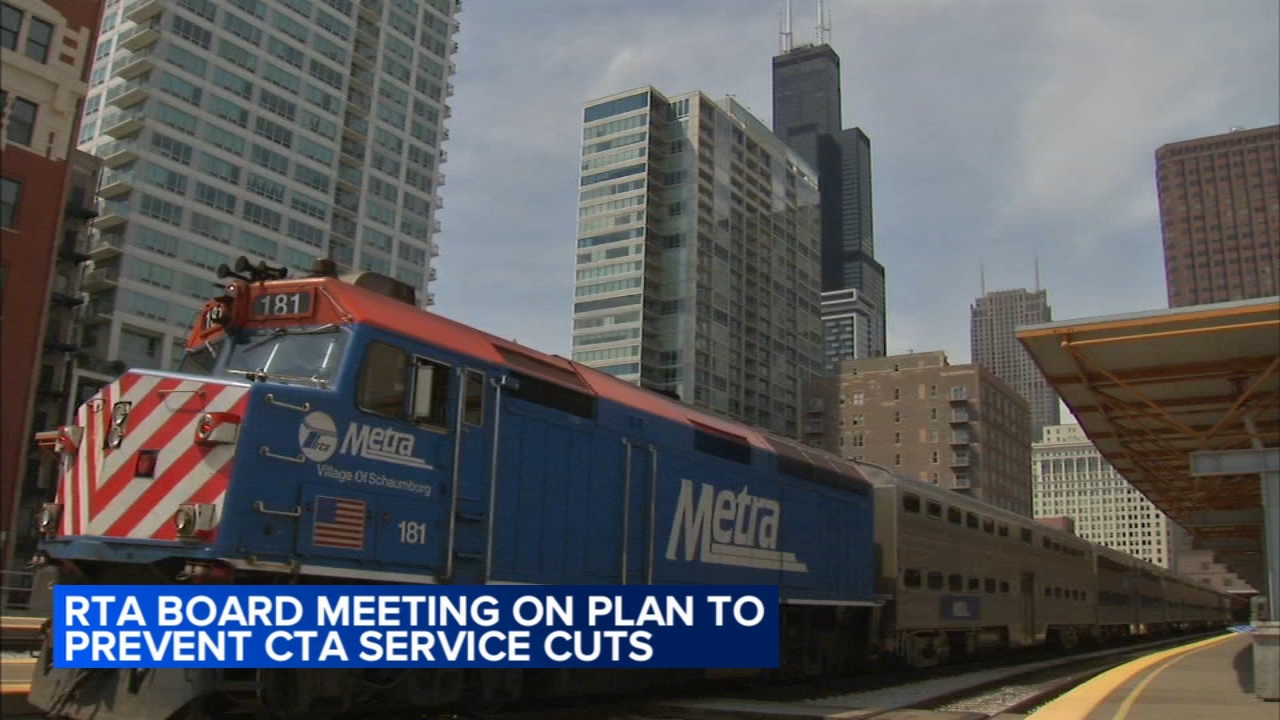
CHICAGO (WLS) -- Every day, the transit fiscal cliff gets closer, but, on Thursday, the Regional Transportation Authority Board took steps to delay its arrival by shifting $74 million to the CTA from its sister agencies.
It's a funding shot in the arm for the CTA that could help the transit agency avoid layoffs or cuts to service that are looming because of the so-called fiscal cliff.
ABC7 Chicago is now streaming 24/7. Click here to watch
The money is coming out of the budgets of Metra and Pace.
The CTA is the transit agency that is facing the most pressing fiscal challenges, so the RTA shifted the money over, but it's only a Band-Aid on a very serious problem that is going to require major funding help from Springfield.
"It pushes off the fiscal cliff and make sure that people can get to work, and school, and to their doctor's appointments or whatever else they use the CTA for," RTA Chairman Kirk Dillard said. "It's more than a Band-Aid. It's making sure that we provide as good of service as we can with the dollar amounts that are available, and it gives the legislature a little more time to figure out how they're going to solve the fiscal cliff."
The RTA says it needs more than $770 million in order to avoid that transit fiscal cliff next year.
"There's this death spiral when, whenever transit agencies cut back on service, our region may never recover if we have a 40% reduction across the board," RTA Board member Dennis Mondero said.
Lawmakers adjourned the spring session without taking any action to fund transit.
Looming are the possibility of massive layoffs and services cuts to the CTA, Metra and Pace. RTA Board members are stressing the urgency of action by Springfield.


While the money shift was approved unanimously by the RTA board there were some reservations.
"We will never get the urgency level we need for them to act until we specifically spell out what bus routes, what train routes are going to go away, how often they won't run," RTA Board member Thomas Kotarac said. "I think this is again, another clear indication we're getting closer to the cliff, and we've got a lot of choices that are bad and worse."
Ridership has increased in all three agencies since last year and now tops more than a million people per day.
Before the vote, advocates for people with disabilities packed the board room to raise concerns about budget cuts to para-transit that were approved in June. The changes drastically reduced the number of ride-share and taxi rides they can take from eight a day to 30 a month.
"Just because the 30 rides will be the best in the country doesn't mean it's the best. We need to think about us as a community," said Chernell Lane, a rider with a disability.
And while some lawmakers would like to see the governor call a special session before the end of the month, that is considered unlikely.
"We talk to state legislators every day. They know the importance of mass transit. They know there's a fiscal cliff. They've had a lot of pressures on them, but I'm confident they're going to come up with a solution that's workable and viable," Dillard said.
And while the framework for funding has been discussed, nothing has been finalized.
Lawmakers are expected to deal with the transit funding crisis when they reconvene for the veto session in October.