Immigration officials change protocol for reporting deaths of detainees removed from custody
First 14 months of 2nd Trump administration represent deadliest period for federal detention system in recent years

BROADVIEW, Ill. (WLS) -- A critical policy change from the U.S. Immigration and Customs Enforcement is raising alarms over the agency's transparency when it comes to people who have died after they were in federal custody.
ICE officials confirmed they are ending a policy that required the agency to report the deaths of former detainees that occur within 30 days of their release from an ICE detention center.
ABC7 Chicago is now streaming 24/7. Click here to watch
The President Joe Biden-era policy required ICE and Department of Homeland Security officials to review and report all detainee fatalities, including those that occurred post-release.
Officials at the time said the purpose of the 2021 policy was to ensure ICE could not avoid accountability for deaths by releasing severely ill people from custody.
This policy reversal is now coming at a crucial time for transparency, advocates say, after 18 people have died in ICE custody so far this year.
According to an ABC News analysis of ICE data, as well as ICE records provided to Congress, the first 14 months of the second Trump administration represent the deadliest period for the federal detention system in recent years -- with the exception of 2020, when the coronavirus pandemic contributed to detention deaths.
Those figures include Nenko Gantchev, a 56-year-old man from Chicago who died after he was arrested during "Operation Midway Blitz," when he and his American wife appeared for a green card interview in the city.
Gantchev was taken to a Michigan detention center. And nearly three months later, he died of a heart attack, with diabetes listed as a contributing condition, the I-Team found.
"We know this is, you know, one of the deadliest periods in recent years in federal detention," said Danielle Berkowsky, an attorney with the MacArthur Justice Center.
Berkowsky is co-counsel on a federal lawsuit filed last year in the Northern District of Illinois against DHS over improving conditions inside the Broadview ICE processing facility.
She calls the recent change in ICE's protocol for reporting deaths troubling.
"It tells us that they are also not interested in looking at what they did that could have contributed to someone's death," Berkowsky said. "And more importantly, what they could do to prevent that from happening in the future."
Reports published by ICE and reviewed by the I-Team show many of the deaths this year -- 10 out of 18 total -- occurred after detainees were taken from an ICE facility to a hospital in need of medical care.
A spokesperson for DHS, which oversees ICE, said this new policy change is, "common sense."
"ICE is not responsible when an individual passes away weeks after leaving (ICE) custody," a spokesperson said. "Under this updated policy, when an individual is no longer in ICE custody then ICE will no longer be responsible for monitoring or reviewing deaths that may occur."
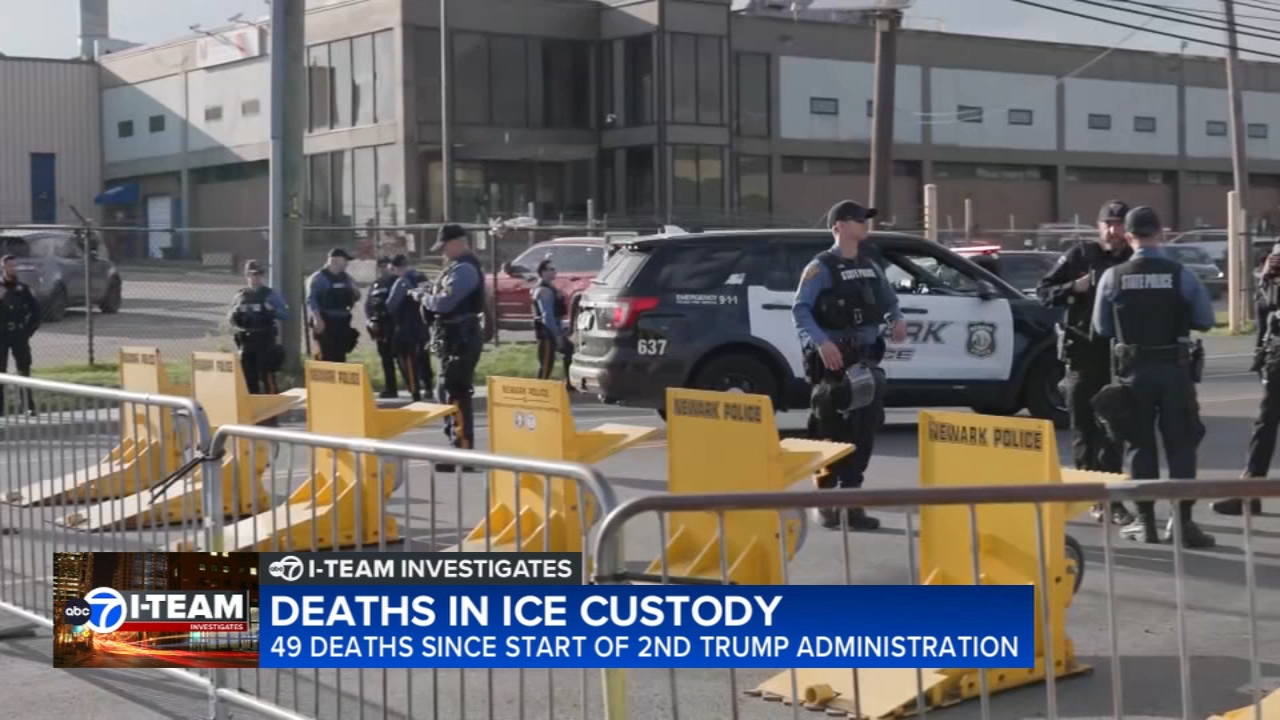
The policy change comes as there have been heightened calls to improve conditions inside ICE detention facilities across the country, including at the Delaney Hall immigrant detention center in New Jersey where there have been protests and clashes with federal and local law enforcement over the past few weeks.
At a House Committee hearing this week over the Department of Homeland Security's budget, Democratic lawmakers pressed Secretary Markwayne Mullin over detention center conditions.
"This seems to be a pattern in practice," said Rep. Julie Johnson, D-Texas.
At one point, the topic of food was brought up by Illinois Rep. Delia Ramirez.
"Given these standards and reports of decaying food confirmed by congressional oversight, would you retract your comments dismissing detainees' concerns about rotten food as a desire for ethnic food?" Ramirez asked DHS Secretary Mullin.
"I didn't say rotten food," Mullin replied. "I said they wanted ethnic correct food, and I said this isn't a Holiday Inn. We're not providing that."
A spokesperson for DHS has said the agency is committed to transparency regarding detainee deaths.
"The government owes a duty of care to the people in its custody," Berkowsky told the I-Team. "If the government cannot provide the level of care someone needs to live, then they should not be holding people in their custody."