The enduring legacy of 'Sirius,' the Chicago Bulls' entrance anthem

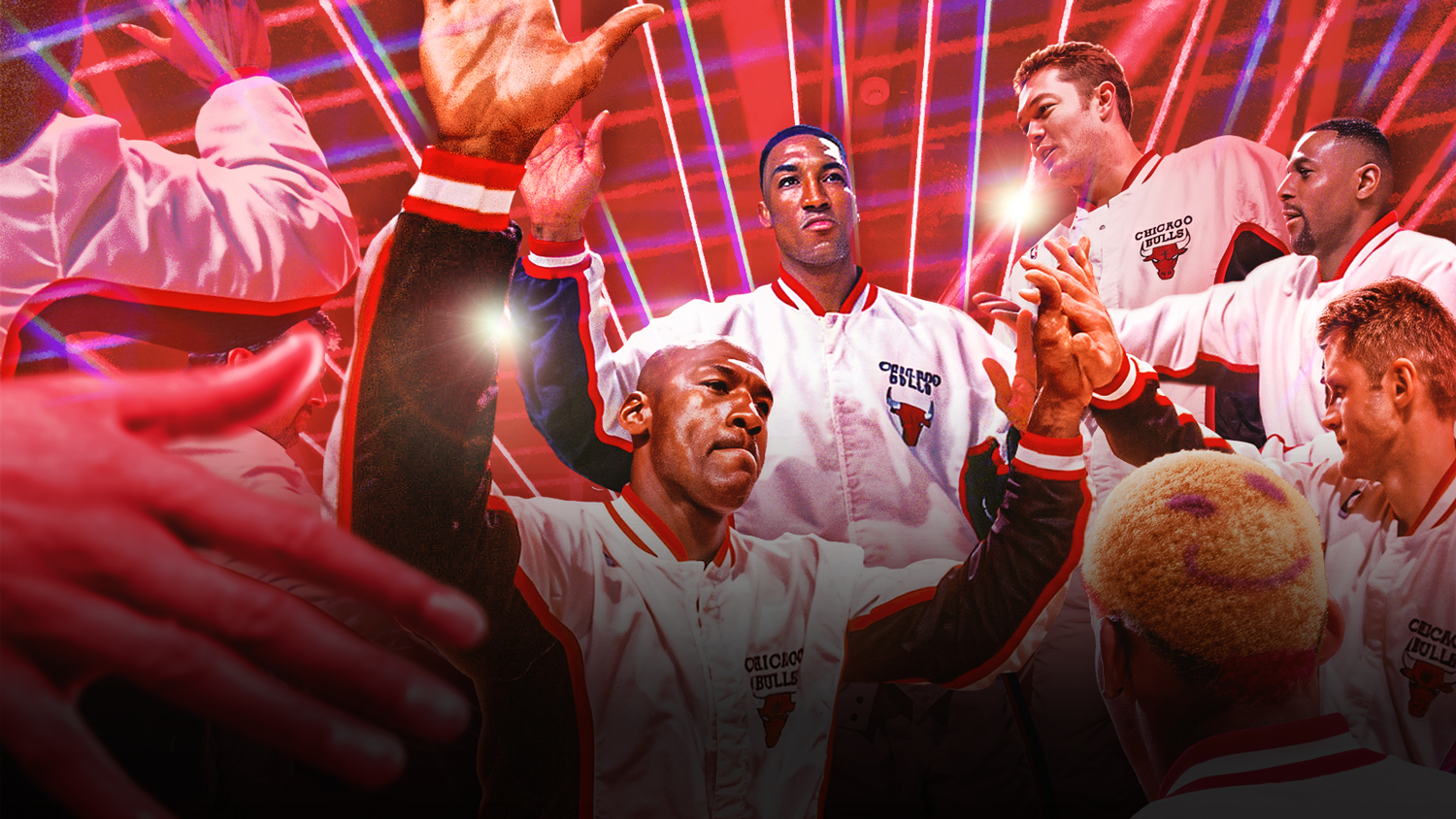
By the time Luc Longley was sitting on the Chicago Bulls' bench inside the United Center during the pregame introductions, lights off around him, the crescendo of the crowd rising, Longley's pregame routine was almost complete.
There was just one more step.
Once the opening notes of "Sirius," a 1982 song by British rock band The Alan Parsons Project, filled the United Center to kick off the most famous introduction in the league's history, Longley's pregame routine was complete.
By the time former Bulls public address announcer Ray Clay introduced Scottie Pippen and Dennis Rodman, and arrived at, "The man in the middle, from New Mexico, 7-2, Luc Longley," Longley knew he was set.
"I used 'Sirius' to bring myself into the moment of the game, into the moment of competition to be that alter ego of a good basketball player that you can't live in all the time," Longley told ESPN. "You have to adopt that camouflage, or whatever you want to call armor going into the game because if you wear it all the time, you're not very much fun to be around.
"So, my device became 'Sirius.' It wasn't that I didn't hear it. It was the opposite. I immersed in it, and that was the trigger for me to be a basketball player while I was on the Bulls."
Thirty years after the Bulls set a then-NBA record by going 72-10 in the regular season, which ignited their second three-peat of the Michael Jordan era, Sirius and Chicago's introductions have lasted the test of time. It's still iconic. It's still relevant. It's still memorable. And it has crossed generations.
The story of "Sirius" is also the story of how music helped build the energy of the Bulls in the 1990s.
To the players who heard it at least 41 times a season as a member of the Bulls and to those who heard it occasionally as a visitor, the music had a contrasting effect.
"Well, that Bulls' introductory score for 'Sirius' was a cheat code for us," Longley said.
The Alan Parsons Project might have brought "Sirius" into the world, and Clay might have taken it to another galaxy, but the music being paired with the introductions had long been a Bulls staple before Clay took over the Bulls' PA microphone during the 1990-91 season.
His predecessor, Tommy Edwards, brought "Sirius" to the old Chicago Stadium.
Before Michael Jordan's rookie season in 1984, the Bulls called Edwards, who, by then, had been their PA announcer for seven years over two stints, at home and charged him with coming up with an introduction that was "bigger and better" than what he had been doing. Shortly after that call, Edwards and his wife went to a movie at the famed Biograph Theater in Chicago when Edwards noticed the ambient music playing before the movie started.
"Wait a minute, I know this song," he said, interrupting his wife.
It was "Sirius," then well-known as the prelude to the song "Eye in the Sky." He zoned out during the rest of that conversation and the movie, thinking about how he could use that song during his introductions.
Edwards debuted "Sirius" as the background for the Bulls' introduction on Oct. 26, 1984, Jordan's first NBA game.
By the time the Bulls were on their way to their fourth championship in five seasons, the introduction had become its own show. Chicago's broadcasters, Johnny Kerr and Neil Funk, would suggest to their viewers that they should get to their seats early to watch the pregame introductions. And when NBC began broadcasting NBA games during the 1990-91 season, when the Bulls won their first world title, the network showed the introductions live.
So, when the Bulls moved to the United Center for the 1994-95 season, and especially when the Bulls became a locomotive without breaks in the 1995-96 season, "Sirius" and the entire introduction were a spectacle.
"Every once in a while, after the introductions were done, you would get an opponent who would come by the table where I was at, they would give me a thumbs-up or a 'great job' or something like that," Clay told ESPN.
For those Bulls who weren't in the starting lineup, their gaze instinctively went toward the Jumbotron hanging over center court. A laser show and graphics accompanied the music.
And they weren't the only ones watching.


Former Bulls guard Randy Brown, a reserve who played 68 games in 1995-96 but didn't get a start, remembered looking at the opponents at times during the introductions and seeing them watch the video.
"I think by the time the video was over and the smoke cleared, we basically had a 15-point lead," Brown said. "We were a force at home, and that was one of the first things Phil Jackson said in our meetings during training camp: He didn't want us to lose at home.
"And that Chicago Bulls introduction probably will go down in history, probably the best ever, along with the 72-10 team, as well."
Former Bulls guard Jud Buechler, who played on six other teams besides his four seasons in Chicago during his 12-year career, knows what it's like to be on both sides of the music.
"I just know that when I was on the other side in the early '90s, it was extremely daunting, for sure," he said.
Brown remembered hearing a saying from various players during his 12 years in the NBA: "You can lose an NBA game in the first quarter, but you can't win it."
"We can sense that our opponent was a little bit intimidated by that show, and it energized us," Brown said. "It energized the United Center fans, who I think are some of the craziest fans out there, right up there with those crazy Knicks fans today. That was the Bulls in the '90s. And it propelled us, man, to break out in first quarters to jump on teams right away. And most of the times that we got a 10-point lead in the first quarter, we would try to extend that, and we just tried to put teams away. Sometimes, it didn't happen, but most of the time in the United Center, we basically cruised to wins."
Jackson got his wish. The Bulls were 39-2 at home in 1995-96.
The Bulls were dominant that season, which was Jordan's first full season back after leaving basketball following the 1993 season to pursue a baseball career. They started 10-1 and were 25-3 leading into the new year. Chicago didn't lose its fourth game of the season until Feb. 4, 1996.
Between facing the Bulls when they were hot, arguably the greatest player ever in Jordan, and two of the best sidekicks in history in Pippen and Rodman, teams visiting the United Center were already intimidated.
Then, they got to the arena, took the floor, looked up at the banners and another wave of fear crashed over them.
And that was before the lights went off and the music started.
At that point, Buechler felt the Bulls were "pretty invincible."
"We did have, I think, an emotional intimidation factor that came with that team, especially as the season built and the introductions at home were part of that," Longley said. "I think teams walked into that gym and they felt the weight of the expectation about a performance for sure.
"So, yeah, it was a lever that we pulled, and I was pleased to be part of it."
"Sirius" will be 45 years old next year and is used in different arenas and stadiums across different sports, but it has become forever linked with a pregame spectacle that didn't last two minutes.
Three decades later, those who experienced Sirius in the United Center can't forget it. Buechler was at a wedding recently, and the bride and groom were introduced to "Sirius." He got chills.
When Longley listens to "Sirius" now, he said, "It's like mainlining the past." Hearing it evokes feelings inside him that seeing it can't. Just as it did 30 years ago, when the music was the final piece of Longley's pregame routine.
And he needed it.
"If you're Michael Jordan, 'Sirius' might have a 2% effect on your pregame ability to get in the zone," Longley said. "If you're Luc Longley, and it's really f---ing hard to be as good as you need to be every night because you're not that talented, 'Sirius' can have a 20% effect. It's the guys like me who can use that s--- to really help. I don't know that it did much for MJ. He'd have to tell you."br/]