How to safely use free Wi-Fi on flights, avoid cybersecurity hackers


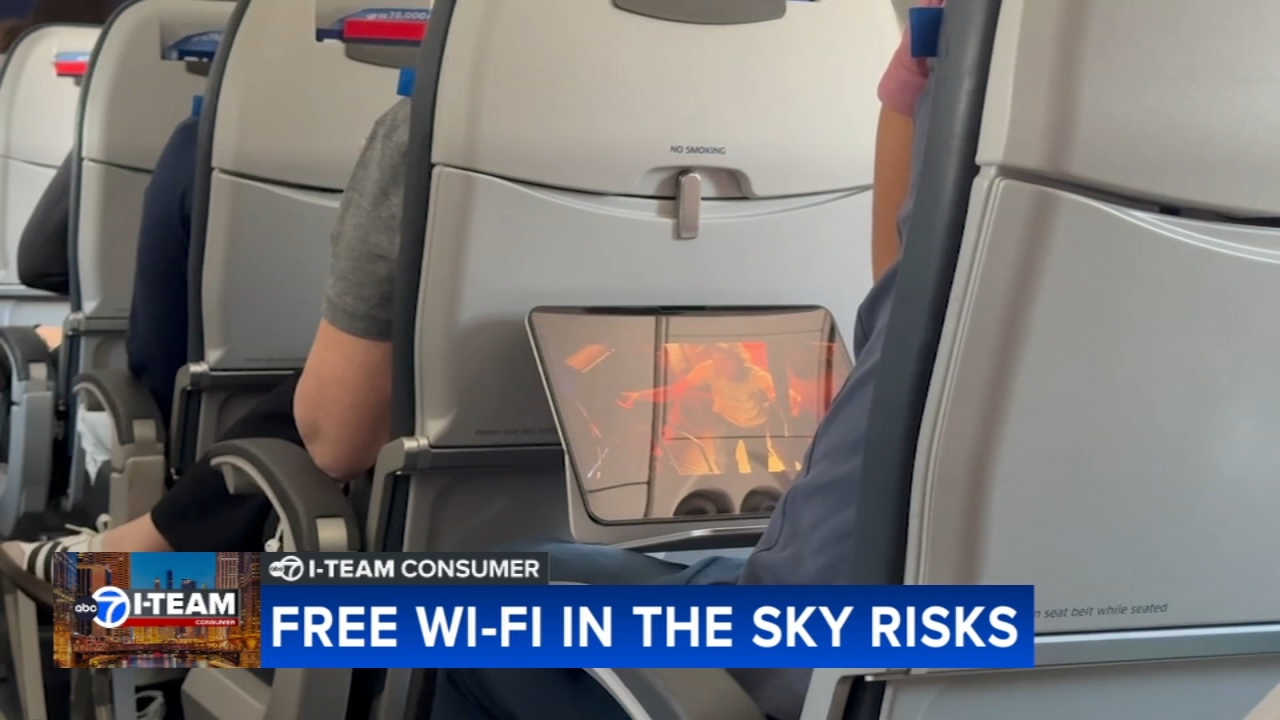
CHICAGO (WLS) -- As most major U.S. airlines roll out complimentary in-flight Wi-Fi, the I-Team is investigating the potential risks of that free perk in the sky.
ABC7 Chicago is now streaming 24/7. Click here to watch
Free internet at 35,000 feet may sound great, but cybersecurity experts say it can also make you a target, mainly because more people will be using it.
"You have to be a member or part of their loyalty program to take advantage of this benefit but it's free to use," Katy Nastro with Going.com said. "When it comes to airlines rolling out new features, we see patterns where one will start, and others will follow suit and offering free wi fi is not different."
But security experts form Saily.com, which is part of Nord VPN Security, warn that cybercriminals could be flying with you. They could set up what's known as a "man in the middle" scam.
"The hacker now is essentially a man in the middle of all of my traffic. Everything that I am doing on my device goes through his device," Matas Cenys with Saily said.
Much like public Wi-Fi on the ground, the hacker can build a fake login portal that looks much like the airline's sign in page, it's also known as an "evil twin."
You could accidentally log into it if the bad actor near you has a strong signal.
Top Stories


"A good example recently happened in Australia where a person did exactly that year build. He performed the 'evil twin' attack and made this capture of websites on his own device trying to capture user emails and social media credentials and people entered that information," Cenys said.
Remember, scammers prefer a goldmine of big crowds, making the cabin a target. So. how do you browse safely in the sky? First, look for duplicate Wi-Fi names.
"If you open the Wi-Fi list and you see a couple of names that are named exactly the same, for example, an airline Wi-Fi or something like that, and there are a couple of entries on it. This should raise suspicious for you," Cenys said.
Make sure you ask the crew what the airline's official Wi-Fi network is; choose HTTPS-only sites; avoid websites with personal information like banking and financial institutions; and disable file sharing and AirDrop while on public networks.
For even more enhanced security in the sky, you could also consider using a virtual private network, which creates an encrypted tunnel.
Airlines for America, the trade association for the leading U.S airlines, says safety and security of passengers is top priority and that cybersecurity programs are in place.
They added that airlines continue to invest heavily in technology to boost security and redundancy.