Chicago Cubs use scoreboard rain barrels to conserve water at Wrigley Field
2 rain barrels are helping Cubs save 1500 gallons of water per year

CHICAGO (WLS) -- Keeping Wrigley Field green takes more than sunshine and a dedicated grounds crew.
It also takes water -- and one Cubs employee found a creative way to conserve it.
Water conservation is a key part of the Chicago Cubs' sustainability efforts, and because Wrigley Field is more than 100 years old, the team has had to think outside the box.
That creativity led Assistant Groundskeeper Graham Flora to look to his own backyard for inspiration.
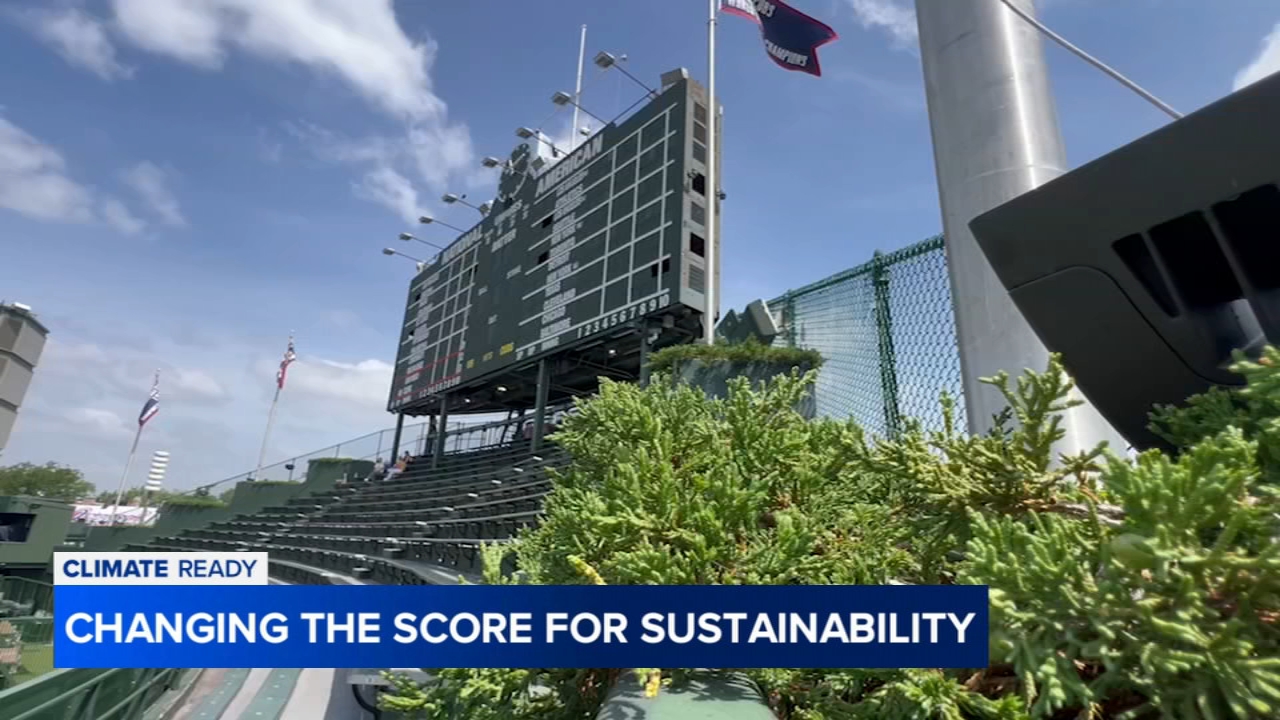
While tending to the juniper plants that cascade down the ballpark's bleacher sections, Flora noticed an opportunity high above the field. At the top of Wrigley's iconic 60-foot scoreboard, rainwater from the roof drains away after storms.
Flora came up with an idea to capture that water using rain barrels connected to the scoreboard's drainage system.
"I was thinking about using rainwater, and the fact that we had the two drains on the roof of the scoreboard, and I just thought about getting rain barrels to 'em, and one thing led to another," Flora said.
Today, the system captures enough rainwater to save the Cubs roughly 1,500 gallons of water each year.
The rain barrels are just one part of a larger sustainability strategy at Wrigley Field.
"It's in the ballpark: waste less. In the community: give more. In the ballpark: energize responsibly, and in the community: power change," said Maria Sapienza, the Cubs' director of analysis and planning operations.
The Cubs also closely monitor water use throughout the ballpark.
Top Stories



"Water runoff is a big issue," Sapienza said.
The team tracks water used for field maintenance and even the water used to clean the ballpark after games, helping identify opportunities to reduce consumption and improve efficiency.
"So when the ballpark is cleaned after every game to be nice and clean for our guests, we want to make sure we're measuring what exactly water usage is that for versus what's on the field so we can see what's happening and get better at it if we need to," Sapienza said.
The Cubs hope their efforts can encourage fans and neighbors to think about sustainability in their own communities.
"Sports have a really unique opportunity in the world to do good for people," Sapienza said. "The more we can do the right thing, be good neighbors, waste less, give more, hopefully that just snowballs and inspires people."
The team's sustainability efforts extend beyond water conservation.
Inspired by another backyard idea, the Cubs installed beehives on a rooftop after receiving guidance from a neighbor. The team now produces its own honey and hopes to eventually use it in food served at Wrigley Field.