Crews appear to start dismantling Broadview ICE facility fence; deadline is 11:59 p.m. Tuesday
DHS says it has 'credible intelligence' that Mexican cartels issued a tiered bounty program for hits against ICE and CBP agents.

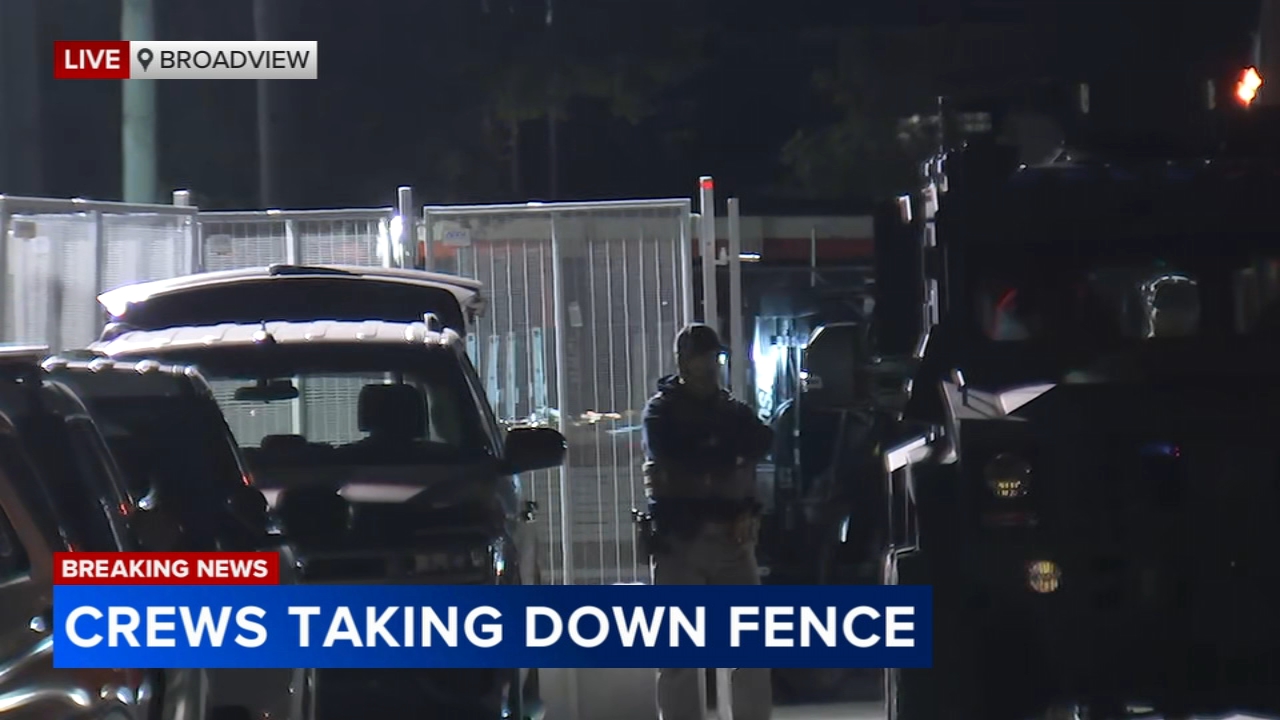
BROADVIEW, Ill. (WLS) -- Crews appeared to start dismantling the Broadview Immigration and Customs Enforcement facility fence late Tuesday night, ahead of an 11:59 p.m. Tuesday deadline set by a judge.
Late Tuesday night, a flat-bed truck that appeared to be carrying fencing material was allowed into the restricted area.
ABC7 Chicago is now streaming 24/7. Click here to watch
Earlier Tuesday, it was quiet at Broadview, and some questioned whether the fence would be brought down ahead of the deadline.
"They're gonna drag the feet as long as possible and I don't expect it to happen," protester Levi Rolls said. "It sends a message that yeah, the executive branch isn't gonna listen to the judicial branch, and it's very dangerous precedent to set."
The fence has stood blocking the public right-of-way. The village argued that it is a safety hazard, especially for first responders.
Department of Homeland Security officials maintained that the fence, set up on Sept. 23, is a necessity for the safety of federal agents and federal property while demonstrators say it limits their First Amendment rights.
DHS Assistant Secretary Tricia McLaughlin said, "After rioters and sanctuary politicians obstructed law enforcement, threw tear gas cans, rocks, bottles, and fireworks, slashed tires of cars, blocked the entrance of the building, and trespassed on private property."
Monica Breslin, 27, has been out at the facility daily after work, demanding the Constitution be followed in allowing protesters to assemble peacefully. Breslin said she has been searched by federal agents and hit by police pepper balls in the last few days.
Breslin also said she has pushed out of previously defined protester areas. Yet, on Tuesday night, she and others were not removed despite a local curfew banning protests after 6 p.m.
State legislators called the fence a symbol of division this week. And as the court-ordered deadline for its removal approached, Democratic Illinois House Speaker Chris Welch was asked what would happen if the fence is not taken down.

"We have a court order in place that is ordering it to come down by midnight. I don't think they have to wait to do what's right. They should bring it down now, and if they don't, we're going to see our Attorney General, likely to go back into court," Welch said.
SEE ALSO | Chicago federal intervention: Tracking surge in immigration enforcement operations | Live updates
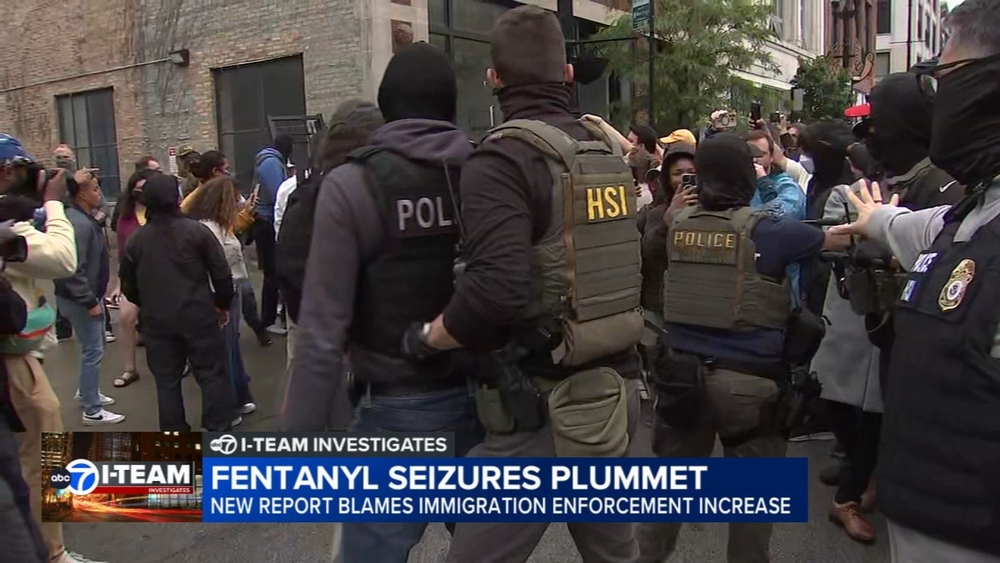
If anything, security around the ICE facility has tightened as state and local law enforcement coordinated plans, primarily in the name of protecting First Amendment rights, to keep protesters and federal agents safe as they encounter each other.
"If the the the norms of the government are not respected, if somebody says, the judiciary makes a decision, and then the executive branch ignores it. That's chaos," said former federal prosecutor Ron Safer.
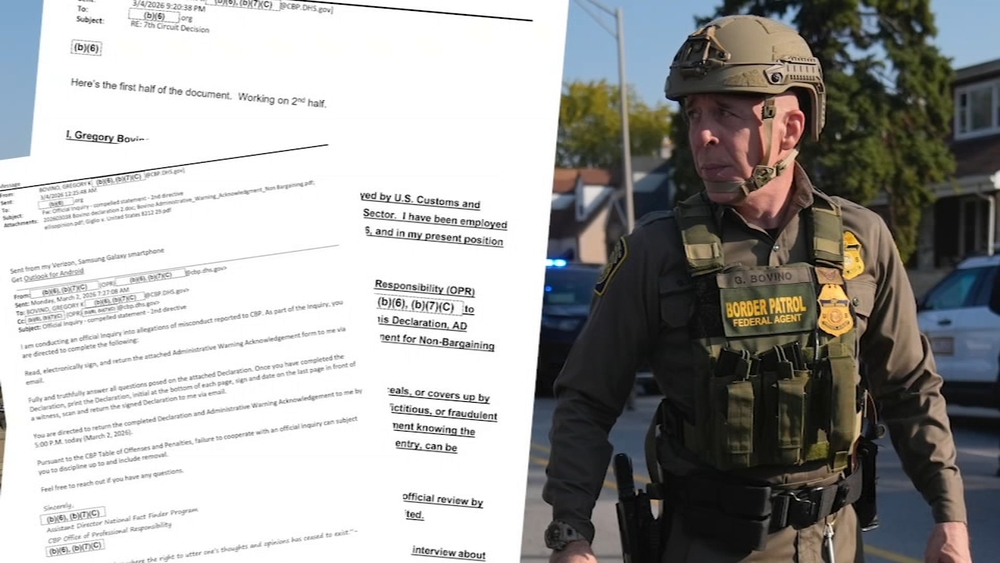
Meanwhile, DHS released new information about the threats it says federal agents face while "protecting our borders and communities."
DHS says it has obtained what it calls "credible intelligence" that Mexican cartels have issued a tiered bounty program for hits against ICE and Border Patrol agents.
The release from DHS specifically mentions Pilsen and Little Village, where it alleges gang members affiliated with the Latin Kings have organized "spotter networks," deploying people equipped with firearms and radio communications on rooftops.
Earlier Tuesday, U.S. Attorney General Pam Bondi posted on social media that Facebook removed a group where Chicago citizens shared information on when ICE agents were spotted around the city. Bondi said, "Today, following outreach from the Justice Department, Facebook removed a large group page that was being used to dox and target ICE agents in Chicago."
In an interview with ABC7's I-Team, Police Affairs Consultant Bill Kushner weighed in on the troubling trend of doxxing law enforcement.
"Now, you're taking it to a whole different level. I mean, now we're going beyond First Amendment protests and free speech. We're talking about threats, active threats, to law enforcement and members of their families," Kushner said.
The prevalence of social media postings tracking the movement of ICE and Border Patrol pits the safety of federal agents against content that could be protected under the First Amendment.