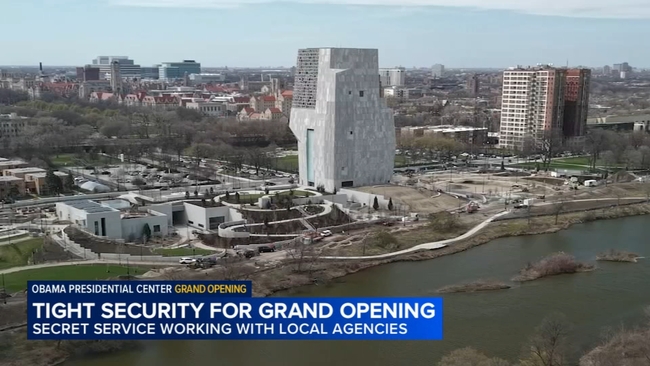
The Obama Presidential Center is expected to bring jobs, tourism, and new investments to Chicago's South Side.
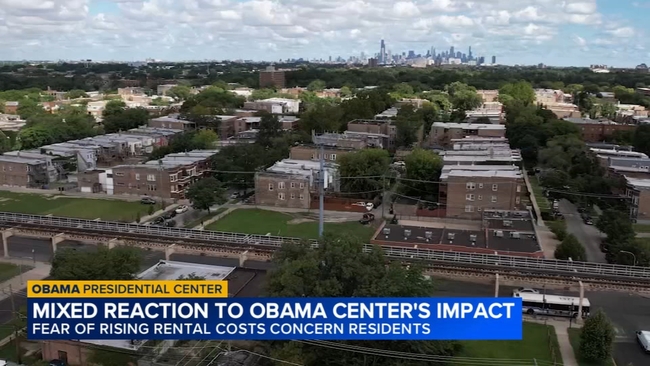
But there is a growing concern as the center prepares to open its doors. Rising rents and property values are leaving many wondering whether they will still be able to afford the community they helped build.
Rising rents and property values are leaving many wondering whether they will still be able to afford the community they helped build.
Many South Side residents are excited that the library of America's first Black president is located in their neighborhood, but there are concerns that the renewed interest will drive up cost and then drive them out of the homes where they have lived for years.
"I'm actually glad it's over here in the neighborhood," said South Shore resident Deneen Ewing.
Ewing can't wait for the Obama Presidential Center to open its doors and become the crowned jewel of the neighborhood.
"It will bring different races in the neighborhood. We need that," Ewing said.
So many in this community have embraced the city's native son, the nation's 44th president, Barack Obama, and the presidential library that is his legacy. But along with the immense pride, there is worry that the community could stop being affordable because of rapid gentrification linked to the presidential center.
"I love South Shore. I love living so close to the lake. Yeah, it's great," said South Shore resident Caressa Franklin.
Franklin moved to her apartment because she loves the neighborhood, and as a bonus, the two-bedroom unit she rents for around $1,200 a month was affordable.
But now, the 32-year-old, who works for a nonprofit, fears she may not be able to stay. She says her landlord has raised her rent by $200 in the last two years, citing increasing property values driving up rental costs.
"I will not be able to afford here, and I'll have to move, and if the price is in the entire neighborhood are looking like this, I won't be able to stay in South Shore," Franklin said.
Despite efforts to create safeguards against displacement of the area's long-term, mostly low-income Black residents, some have been forced to leave the neighborhood.
Community groups like South Side Together pushed for a community benefit agreement with the Obama Center. Executive Director Dixon Romeo says their fight was never against the Obama Center, but instead for affordability and stability.
"It's a false choice, right? This idea that in order for neighborhoods in the Chicago Black neighborhoods, South Shore, or Woodlawn to meet people's material needs, that it has to be unaffordable for you to live there," Romeo said.
The Chicago City Council passed the Jackson Park Housing Pilot Ordinance. The anti-gentrification law went into effect in April and is designed to prevent displacement of South Side residents in the South Shore and Woodlawn areas near the center. It gives tenants the right of first refusal to purchase their buildings, mandating extended lease notices and creating affordable housing on city lots.
Ald. Desmon Yancy, who represents the 5th Ward, says more needs to be done to protect people living in the neighborhood.
"South Shore is one of the most affordable communities in the city, yet in 2023 and 2024 led the city in evictions. So, something's not making sense, right? There is a need for affordable housing, not just across the city, but particularly in Black neighborhoods," Yancy said.
"And residents were right to be afraid. In the decades since the announcement, we've seen that housing costs have soared in the in the area surrounding Jackson Park. Property values have gone up, which means property taxes have gone up. Rental rates have gone up. And many buildings, rental properties have been put up for sale. And the rate of real estate speculation in the area has surged," said Micaela Alvarez with the Chicago Lawyers' Committee for Civil Rights.
There are some protections in place, but some residents aren't convinced that it is going to be enough to keep them in their community.