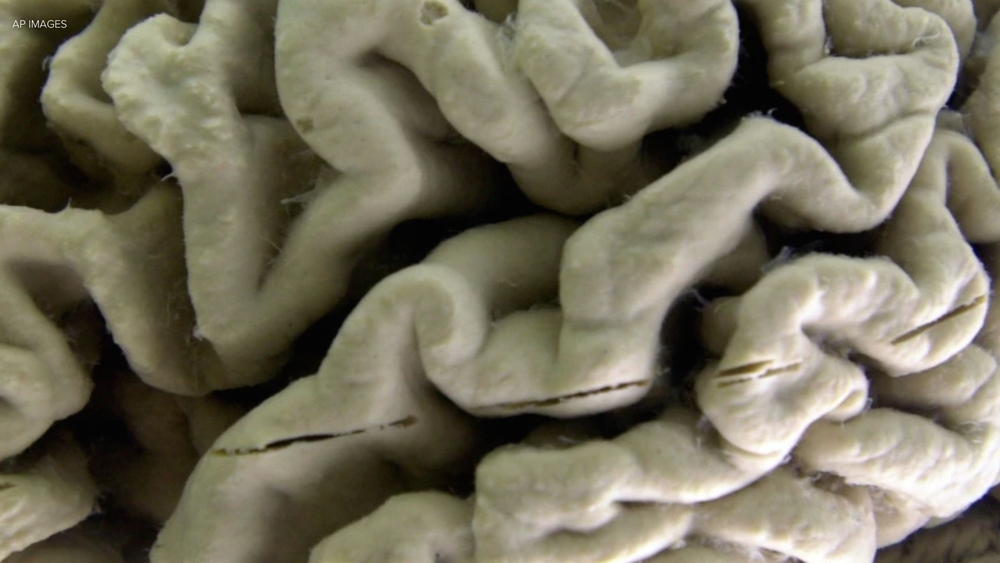
Alzheimer's Association calls on doctors to use newer early diagnostic testing

CHICAGO (WLS) -- A new report is out from the Alzheimer's Association, surveying more than 1,700 Americans.
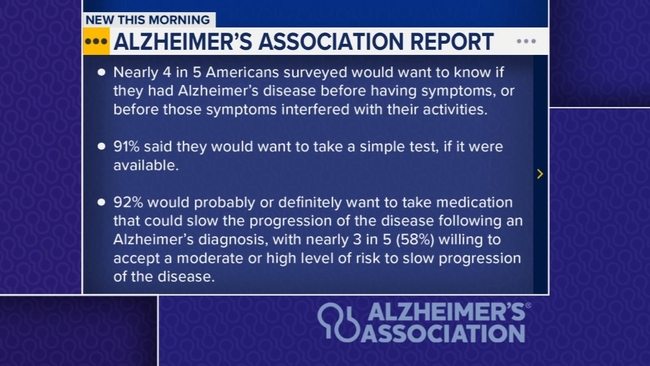
It shows that 79% of those surveyed would want to know if they have Alzheimer's disease before showing symptoms.
ABC7 Chicago is now streaming 24/7. Click here to watch
Over 90% reported they would want to take a simple blood test and possibly try medication to slow the disease's progression.
Olivia Matongo, vice president of programs for the Alzheimer's Association's Illinois chapter, and Richard Apple, a volunteer with the Alzheimer's Association Illinois Chapter, joined ABC7 to talk about the study.
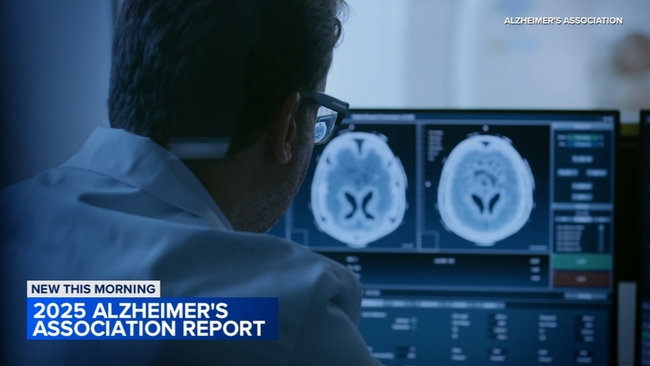
And according to the report by the Alzheimer's Association, new treatments and tests could change how doctors detect and treat Alzheimer's disease, and early diagnosis is a key.


Betsy Merriman was just 55 years old when work colleagues noticed she seemed to be off a little bit. Not long after, doctors diagnosed her with Alzheimer's disease.
She was unable to work soon after, and she died at 62 years old in 2013. Her daughter now serves on the Alzheimer's Association National Board.
"A that time, there was a very little in the way of treatments and prevention," said Aimee Nolan, Merriman's daughter.
But that is changing. Neurologists say the latest treatments are showing results in treating Alzheimer's rather than simply treating the symptoms.
"It's not a cure, but it slows the progression of the disease," said Endeavor Health Dr. Rosalyn Aranas.
The Alzheimer's Association released their annual facts and figures report on Tuesday morning. They say a healthy lifestyle including diet and exercise is important to prevent Alzheimer's, but one of the findings also stresses the importance of testing and early detection for the disease.
"What we're finding from this report is that people want to know if they have Alzheimer's disease, and they want to know early," said Alzheimer's Association Vice President Olivia Matongo.
Doctors say the sooner they can diagnose Alzheimer's, the better the result.
"This is very big, and it can help us individualize treatments," said Northwestern Medicine Dr. Borna Bonakdarpour.
Doctors say those treatments that may help patients prolong the effects of Alzheimer's are only available to patients who are diagnosed early. They are generally not useful later in the disease process.