Illinois law requires culturally competent hair care plans for foster children
Styles 4 Kidz in Oak Park helps teach parents about proper hair care
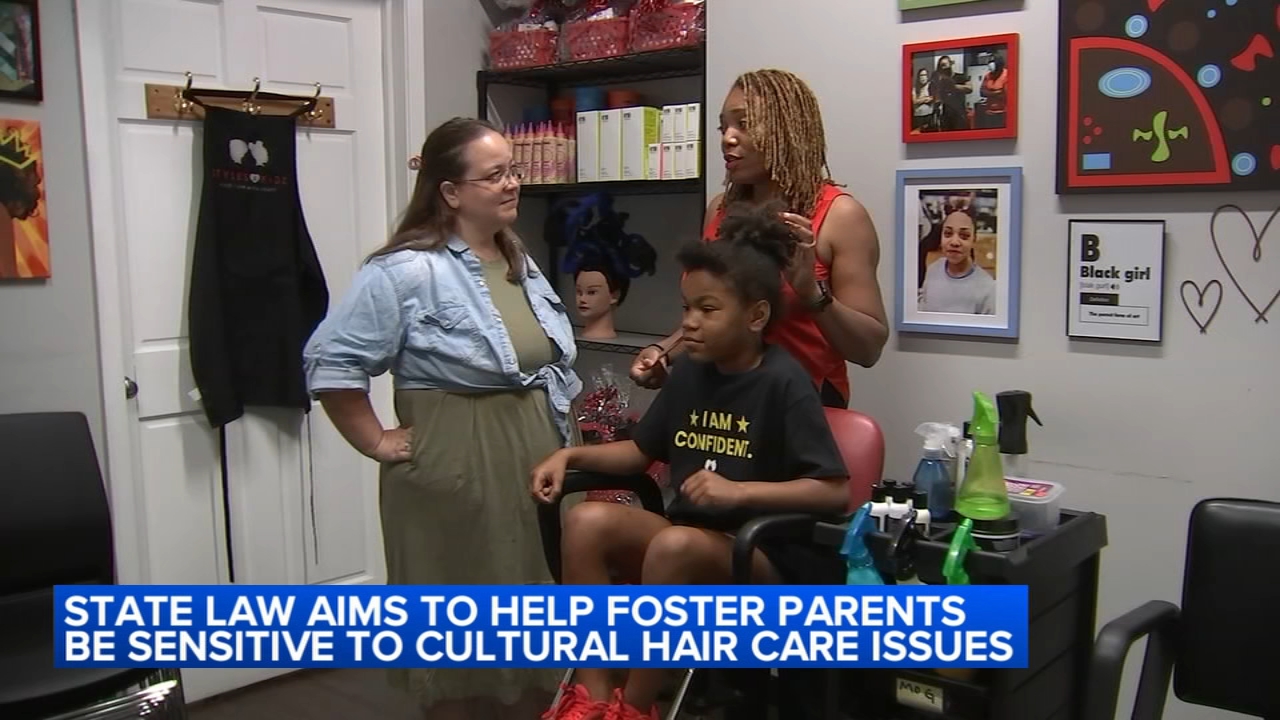


OAK PARK, Ill. (WLS) -- Learning how to care for curly and textured hair can be a challenge for any parent.
For foster and adoptive parents caring for children of a different ethnicity, a new Illinois law is aimed at making it easier while helping children maintain a connection to their identity and culture.
ABC7 Chicago is now streaming 24/7. Click here to watch
At Styles 4 Kidz in Oak Park, families are preparing children for the upcoming school year while learning about proper hair care. The organization specializes in educating foster and adoptive parents whose ethnicity differs from that of the children in their care.
"With Afro-centric hair, it's very very important to make sure that we're hydrating the hair," a stylist said during a consultation.
Tamekia Swint, executive director of Styles 4 Kidz, said hair care plays an important role in a child's confidence and cultural identity.
"We want children going to the classroom feeling prepared, feeling confident, feeling beautiful, feeling handsome, feeling connected to their culture and their identity, and so hair is an essential part of that," Swint said.
Under the a state law, foster parents are required to have a culturally competent plan for their child's hair.
Jacquelyn Dortch, chief of staff for the Illinois Department of Children and Family Services, said proper hair care can have a significant impact on children in foster care.
"When kids can look in the mirror and feel good about who they are. It really impacts their ability to grow, develop, and muddle through being in substitute care while they work to get back home," Dortch said.
For Rachel Hoyt, learning how to care for textured hair became part of caring for her daughter, Felicity, whom she first fostered as a newborn and has since adopted.
"I had to learn different types of products to use. More moisture. That was definitely a learning curve," Hoyt said.
She said preserving a child's cultural identity is especially important for children in foster care.
"I think that it's really important, especially for kids in foster care, to make sure that their culture and their heritage is preserved," Hoyt said.
Hoyt said helping children feel cared for and confident starts with meeting their unique needs.
"It's really important that they can go out into the world feeling good about themselves, knowing that they look good, and know that they're well taken care of and loved, beautiful," she said.
Supporters of the law say proper hair care can help children thrive.
"When this is done well, children are soaring, and that's what we want to see here in the state of Illinois and beyond," Swint said.
As part of the law's implementation, DCFS caseworkers will observe a child's hair appearance during visits with foster families, along with other indication of good care. The agency is also establishing a hotline to provide foster parents with hair care assistance and resources. DCFS hopes to have the hotline available later this year.