Study shows impact of school connectedness on bullied teens

CHICAGO (WLS) -- A new study from Northwestern shows that bullied teens are less likely to be depressed if they feel connected at school.
The study of more than two thousand teens shows bullying at the ages 9 and 15 linked to higher anxiety and depression.
ABC7 Chicago is now streaming 24/7. Click here to watch
Dr. Nia Heard-Garris with Lurie Children's Hospital co authored the study and joined ABC7 to talk about the study.
Study highlights:
-Study of 2,100 teens shows bullying at ages 9 and 15 linked to higher anxiety and depression
-Teens bullied at both ages had the highest psychological distress
-School connectedness helps protect against depression, but not anxiety
- Feeling safe, supported and included at school is key to mental health
- Teachers can help by fostering collaboration and peer relationships
For Parents: What to do if you suspect your child is being bullied
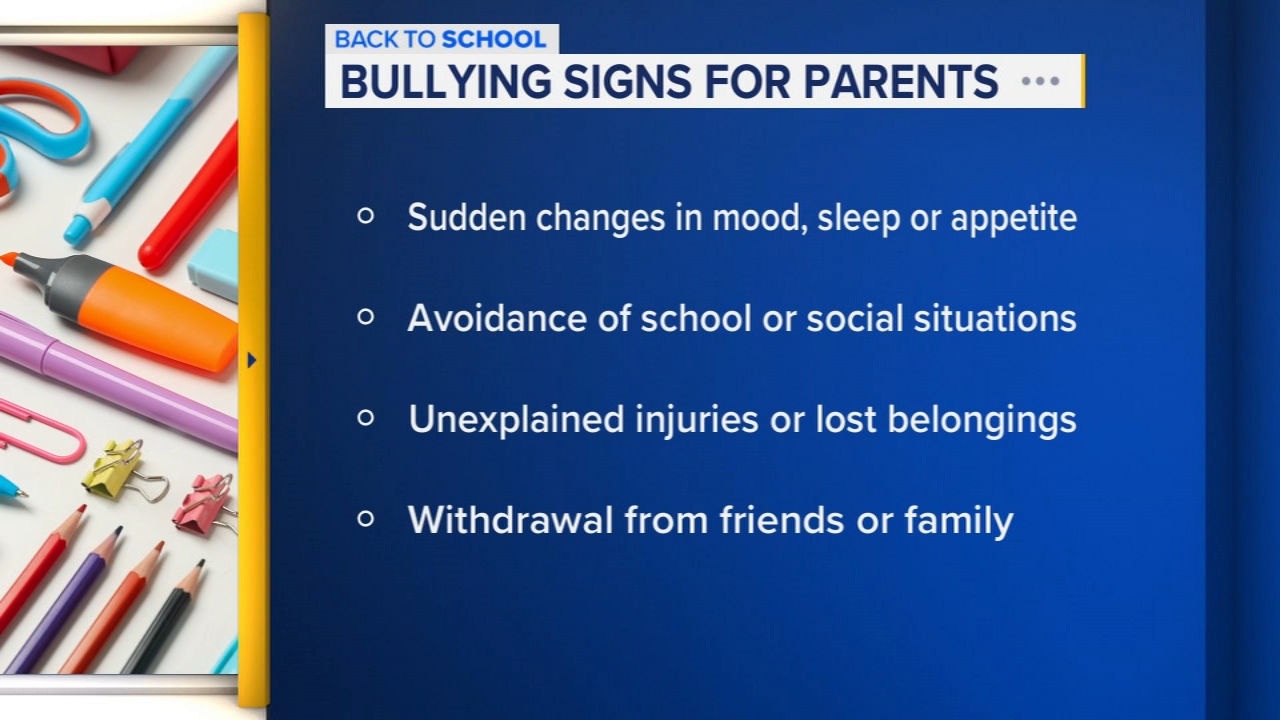
Recognize the Signs:
-Sudden changes in mood, sleep or appetite
-Avoidance of school or social situations
-Unexplained injuries or lost belongings
-Withdrawal from friends or family
How Parents Can Address It:
Steps parents can take:
1. Talk to your child
2. Document what you learn
3. Reach out to teachers or school staff
4. Encourage school connectedness
5. Seek professional support if needed