Chicago man accused of putting hit on CBP Chief Greg Bovino found not guilty after trial


CHICAGO (WLS) -- A man accused of putting a bounty on the life of Border Patrol Cmdr. Gregory Bovino was found not guilty Thursday.
A verdict was reached just before 4 p.m.
The jury of six men and six women got the case about 12:45 p.m. Thursday.
Closing arguments took up all of the morning.
ABC7 Chicago is now streaming 24/7. Click here to watch
It all came down to intent. Did Juan Espinoza Martinez actually intend to commit murder for hire, or was he, as his defense alleged from the beginning, just spreading neighborhood gossip?
"The government wants you to convict based on Snapchat messages sent to a physically challenged friend and his own brother. That's it. That's their entire case. No money exchanged hands, no weapon, just words," Defense attorney Dena Singer said.
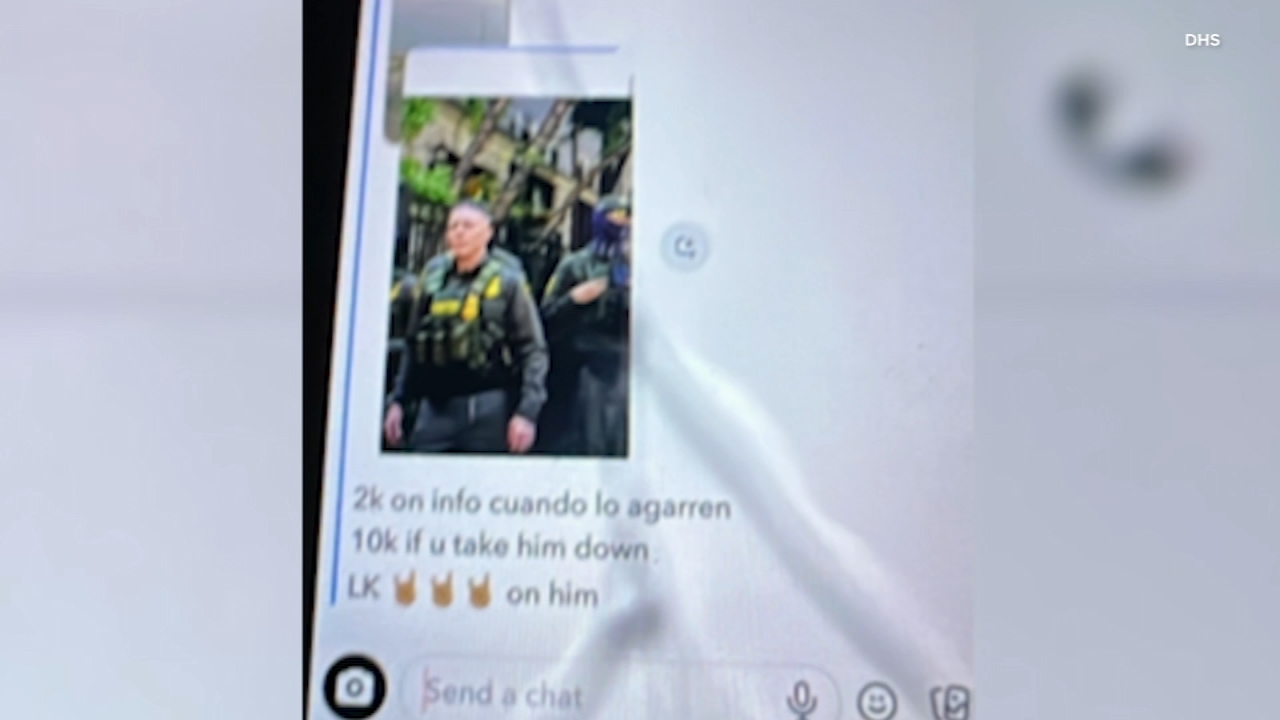
"These three lines of text and one picture show his intent. He went to the time to get a picture and post that picture in that message," said Jason Yonan, first assistant U.S. attorney.
He hammered home what the government has said all along: A Snapchat message sent on Oct. 2 by Espinoza Martinez was a deliberate attempt to place a bounty on Bovino's head during the height of "Operation Midway Blitz" last fall.
The message, in English and Spanish, offered $2,000 for information and $10,000 for his death.
"LK" signified Latin Kings.
RELATED | Judge prohibits gang evidence in trial of Chicago man accused in plot to kill CBP Commander Bovino
And while at the time of his arrest the government painted the 37-year-old union carpenter as a ranking member of the street gang, that allegation was later dropped.
Top Stories


The message was sent to his brother and a man he did not realize was a government informant.
There were also a handful of disjointed text messages and social media posts presented.
The government's star witness did not provide much insight other than to confirm he received the message itself.
The government was unable to provide any evidence to corroborate an alleged murder-for-hire plot.
According to the statute, a person commits murder for hire if they take a substantial step toward committing the crime. That substantial step must be an act that strongly corroborates that the defendant intended to carry it out.
"Just because he didn't like the ICE raids doesn't mean he tried to get Bovino killed," Espinoza Martinez's defense attorney said at closing. "There would be other evidence if that was true."
Espinoza Martinez was visibly relieved as the verdict was read. He's been in federal lockup since early October.
He does not have a criminal record. He is a Mexican national who was brought into the United States as a young child.
The brief trial began Tuesday at the Dirksen Federal Courthouse in Chicago.
The verdict is a blow to the U.S Attorney's Office in Chicago, which has already dropped 14 of its 31 non-immigration cases related to "Operation Midway Blitz." This one was the first to reach the trial phase.
Espinoza Martinez's attorneys said in a statement Friday:
"From day one, we said the government could not prove Juan engaged in any murder-for-hire plot. They could not. We said Juan was not in a gang because he was not. We said that when a jury heard the actual facts, they would acquit. The Jury acquitted him. Juan has been away from his three children and his wife for too long.
"This case is exactly why we have juries and an example of the power of the Jury Trial. Twelve ordinary citizens stood between an overreaching government and an innocent man. They demanded proof, not politics. That's the jury system working exactly as the Founders intended. This verdict is a reminder that juries see through political prosecutions. They demand real evidence, not speculation and character assassination. The government didn't have it. They never did. "