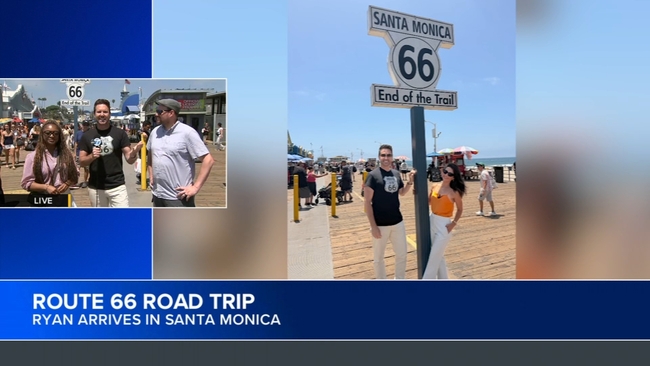
Ryan Chiaverini journeyed to Santa Fe on his way to Santa Monica.
Ryan journeyed to Santa Fe on his way to Santa Monica.
While traveling Route 66, Chiaverini had the opportunity to explore the rich history of Santa Fe, New Mexico, and its connection to the iconic highway.
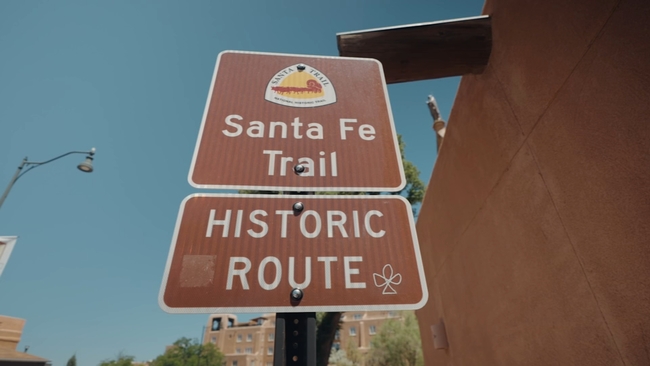
When Route 66 was established in 1926, it made a large northward loop from Santa Rosa to Santa Fe before turning south to Albuquerque. In 1937, the route was realigned to a more direct east-west path, shortening the journey across New Mexico by more than 100 miles. The new route was faster, straighter and better suited for long-distance travel.
The original alignment (often called the Santa Fe Loop) is considered one of the most historically significant sections of Route 66, passing through centuries-old landmarks and cultural treasures. During his visit, Chiaverini explored one of the city's most famous sites, Loretto Chapel.
Loretto Chapel is a historic former Roman Catholic church best known for its "Miraculous Staircase," a spiral staircase that has fascinated visitors for generations. While legend credits its construction to divine intervention, historians and engineers point to the remarkable skill of an unknown craftsman.
According to local tradition, the chapel's architect died before designing a staircase to the choir loft, and the building was too small for a conventional one. The Sisters of Loretto began a nine-day novena to St. Joseph, the patron saint of carpenters. On the final day, a mysterious stranger arrived with a donkey and a toolbox. He spent more than three months building the staircase before disappearing without accepting payment or revealing his identity. Many believed the staircase was a miracle.
Although Santa Fe is no longer part of the official Route 66 alignment, the city and landmarks like Loretto Chapel remain must-see destinations for anyone traveling the Mother Road.