Climate Ready: Midwest ski resorts 'cheat' mother nature to survive season
'In about 6 hours, we can make a pile of snow the size of school bus'

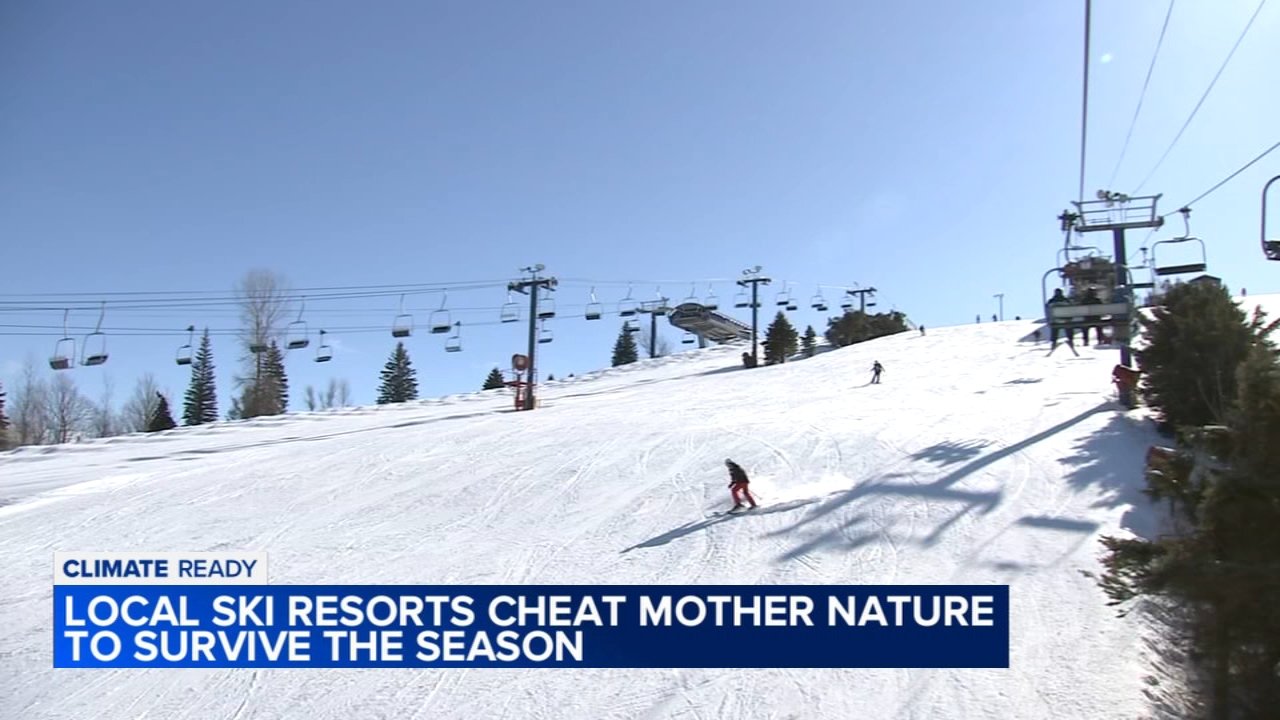
ELKHORN, Wisc. (WLS) -- When Chicagoans want to ski, they don't usually hop on a jet and go out west. Most of them drive over the border into Wisconsin to Alpine Valley, just 90 miles north of the city.
"It's really convenient and it's really easy to just get dropped off and brought up whenever," said Mila Kojak of Oak Park.
"Our dad just dropped us off in the parking lot," added 15-year-old Brooke Castonguay. "It's super close and convenient. We used to do ski lessons here, just one-day trips."
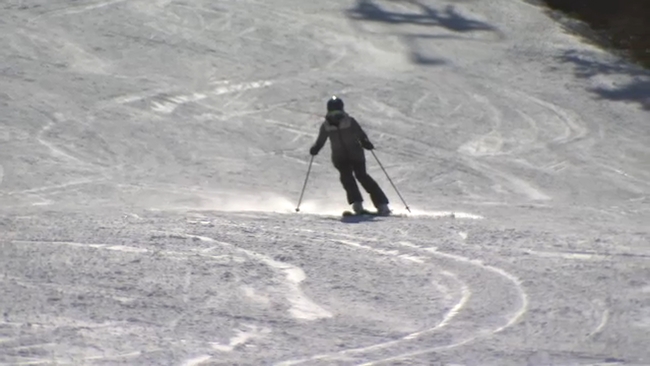
At just 15 years old, friends Mila Kojak and Brooke Castonguay know a thing or two about skiing-and they know you don't have to leave the Midwest to find quality snow.
"I was up in Vail during winter break," she said. "Obviously they have some longer and different runs, but right now the snow's pretty similar."
"If you want to survive as a ski resort in the Midwest, you're putting a lot of your revenue into snowmaking," said Jamison Stachel, Alpine Valley's general manager. "We have 110 days to ski... all these lifts and gear are worth nothing if you don't have the snow."
Stachel said Alpine prides itself on being the first to open and the last to close for the season. That is thanks to its massive arsenal of snowmaking technology.
"We own 170 guns on this resort alone," Stachel said. "They can make a lot of snow. On temperatures like today, you can see the gun running behind me-in about six hours, we can make a pile of snow the size of a school bus."
'Bulletproof' Snow
There is a persistent debate between the quality of natural versus manmade snow. However, according to meteorologist Greg Dutra, the pros often lean toward the machines.



"Olympians, who are much better skiers than I am, they actually prefer manmade snow and the reason behind that boils down to exactly how it's made," Dutra said.
Stachel explained that once the snow is groomed, it is difficult to tell the difference. "We make very, very dry snow, but it is much denser," he said. "And that handles weather fluctuations, a little bit of rain, fog. Our snow will survive it."
He noted that while 10 inches of natural powder can be wiped out by a single day of rain, man-made snow is "bulletproof" and can withstand days of wet weather.
However, this snow can only be manufactured when the atmosphere cooperates. "We make snow based off what they call wet bulb," Stachel said. "It takes in humidity and ambient air temperature combined. We can actually make snow above freezing if the humidity is low enough."
The process is high-volume. Stachel said the resort pumps 6,000 gallons of water a minute through the guns. "From the time we hit 'start' on our guns-if it's 25 degrees-we can be open 40 hours later," he said.
Closed-Loop Cycle
Despite the massive amount of water required, Stachel noted the process is a closed-loop cycle. "It's the same as if it was natural snow. It goes back into the ground," he said. "We're not keeping any of the snow. It's only ours on loan while it's cold."
Even with the most snow guns in the Midwest, warming winters create a constant uphill battle for local resorts. Stachel admitted that they are at the mercy of the temperature.
"I always tell people: the ski resorts, the ski world cannot beat Mother Nature, but we can cheat her," he said. "You give us the cold temps, we'll make the snow. But if we don't have the cold temps, there's nothing we can do."
Ultimately, Alpine Valley focuses on the unique niche it fills in the region. "Wisconsin has more ski resorts than Colorado," Stachel said. "We understand what we are: we're a beginner ski area. We don't have 3,000 feet of elevation. So what we have, we make the most of. It's a social environment; it's a great lifestyle."
This story is part of our Climate Ready series - a collaboration between ABC News and the ABC Owned Television Stations focused on providing practical solutions to help you and your family adapt to extreme weather events and the current challenges of climate change.